


Roofing: Your Ultimate 2025 Guide
Why Understanding Your Roofing Options Matters
Roofing is one of your home’s most critical systems, protecting everything you value from weather, moisture, and structural damage. Yet many homeowners only think about their roof when problems arise – missing shingles after a storm, mysterious leaks, or those dark streaks that seem to appear overnight.
Quick Answer: Your Main Roofing Options
- Asphalt Shingles: Most popular, cost-effective, 20-30 year lifespan
- Metal Roofing: Premium choice, 50+ years, energy-efficient, fully recyclable
- Tile/Slate: Luxury materials, 50-100+ years, highest upfront cost
- Complete System: Includes deck, underlayment, ventilation, and gutters – not just shingles
Modern roofing is more than just shingles. A complete system includes specialized underlayments, proper ventilation, quality flashing, and other integrated components. This “Total Protection Roofing System” approach delivers better performance and longevity than focusing on individual parts.
Whether you’re dealing with an aging roof, storm damage, or planning ahead for replacement, understanding your options helps you make informed decisions. This guide walks you through everything from material choices and system components to hiring contractors and managing costs.
I’m Gerard Stencel, and with decades of experience in exterior home improvement, I’ve seen how the right roofing choice transforms both home protection and curb appeal. At Amsterdam Enterprises, we’ve built our reputation on helping homeowners steer these important decisions with expert guidance and quality craftsmanship.
Your Home’s Shield: Understanding the Complete Roofing System
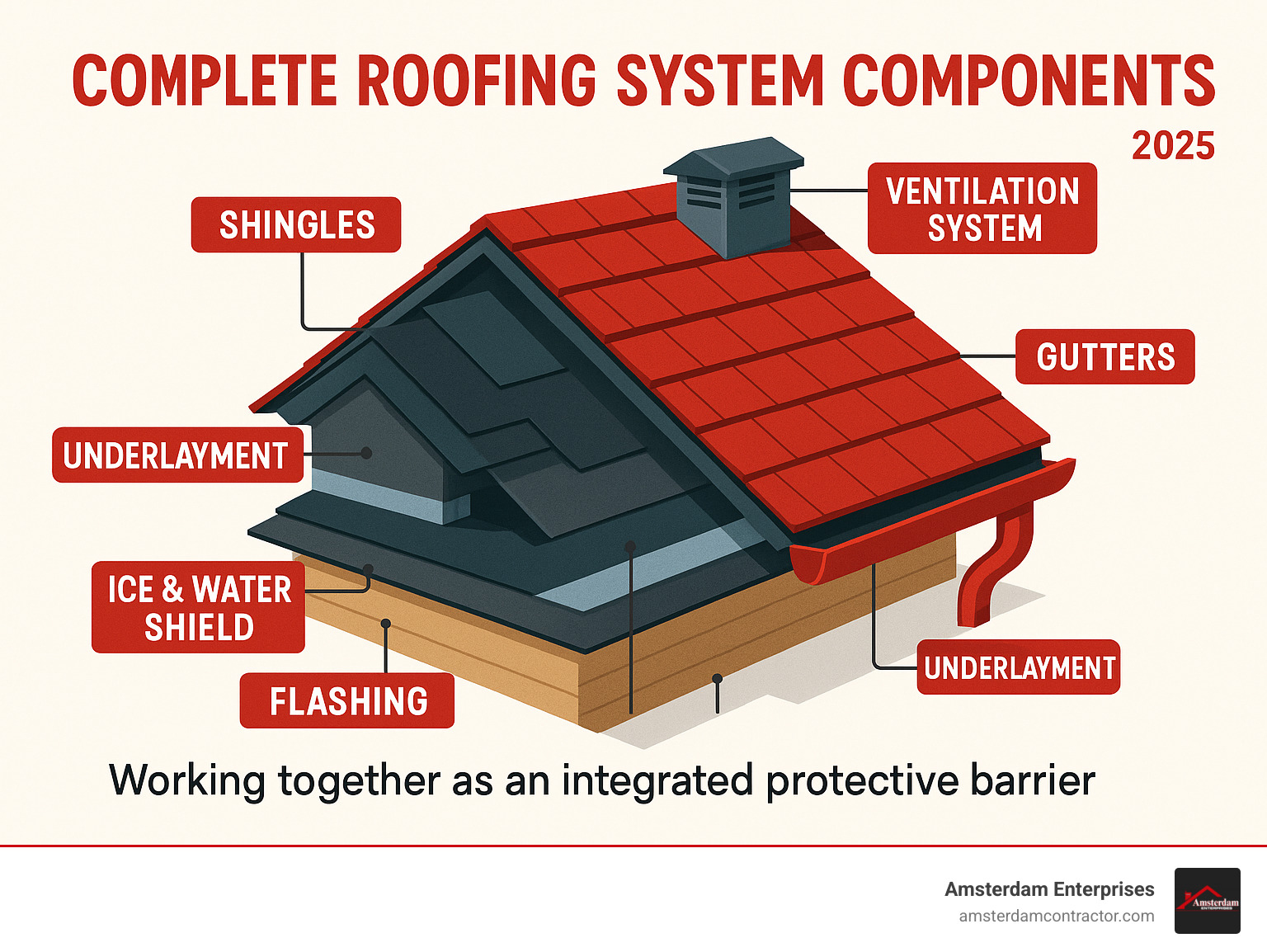
Many homeowners don’t realize that a roof is more than just shingles; it’s a sophisticated system of layers working together. Each component has a specific job, and when installed correctly, they provide protection that keeps your home safe and dry for decades.
Think of it like this – you wouldn’t expect a single piece of armor to protect a knight in battle. Your roof works the same way, with each layer adding another level of defense against Mother Nature’s worst moods.
The beauty of an integrated roofing system is that the whole truly becomes greater than the sum of its parts. When one component fails or gets skipped during installation, it can compromise everything else. That’s why we always emphasize the complete system approach – because cutting corners on any single element often leads to expensive problems down the road.
Key Components of a Modern Roof
Let’s walk through each layer of your roof’s defense system, starting from the bottom and working our way up.
The roof deck forms your foundation – typically sturdy plywood or OSB boards fastened securely to your home’s rafters. This structural base needs to be solid and damage-free because everything else depends on it.
Right on top of that deck goes your underlayment. Today’s synthetic underlayments offer superior tear resistance and waterproofing. They create a secondary barrier that catches any water that might sneak past your shingles during heavy storms.
In areas where ice and driving rain are concerns, we add an ice and water shield – a self-adhering membrane that goes in the most vulnerable spots like eaves, valleys, and around chimneys and skylights where leaks commonly start.
Flashing might not sound glamorous, but it’s absolutely critical. These metal pieces redirect water away from joints and penetrations. Without proper flashing around your chimney, vents, and valleys, water will find its way in no matter how good your shingles are.
Your shingles or roofing covering get all the attention since they’re what everyone sees, but they’re just the final layer in your defense system. They do the heavy lifting when it comes to shedding water and standing up to wind, hail, and UV rays.
Ventilation keeps air moving through your attic space with intake vents at the eaves and exhaust vents at the ridge. This airflow prevents the moisture and heat buildup that can destroy your roof from the inside out.
Finally, your gutters complete the water management system by collecting all that runoff and directing it safely away from your foundation. They’re not technically part of your roof structure, but they’re essential teammates in protecting your entire home.
Why Proper Attic Ventilation is Non-Negotiable
Proper attic ventilation isn’t optional; it’s absolutely essential for your roofing system’s health and longevity.
Moisture and heat control are key. In summer, trapped heat can bake your attic, making your AC work overtime. In winter, warm, moist air from your home can condense on cold surfaces, leading to mold, rot, and ruined insulation.
Ice dam prevention is crucial in cold climates. When heat escapes into your attic, it melts snow on your roof. That water runs down and refreezes at the colder eaves, creating an ice dam that backs water up under your shingles. Proper ventilation keeps your entire roof deck cold, stopping this destructive cycle.
Your ventilation system literally extends your shingle life by preventing the extreme heat that can bake your roofing materials from below. Shingles that get cooked in a superheated attic age fast, crack, and curl, sometimes cutting their lifespan in half.
The energy efficiency benefits are real too. Good ventilation reduces your HVAC system’s workload year-round, which shows up as lower utility bills and more consistent indoor comfort.
Getting ventilation right requires understanding the specific needs of your home’s design and local climate. You can learn about ventilation solutions to see how proper airflow transforms your roof’s performance and your home’s comfort.
Choosing Your Material: A Guide to Modern Roofing Options
Selecting the right roofing material is one of the most important decisions you’ll make as a homeowner. It’s not just about protection – your roof dramatically impacts your home’s curb appeal, energy efficiency, and long-term value.
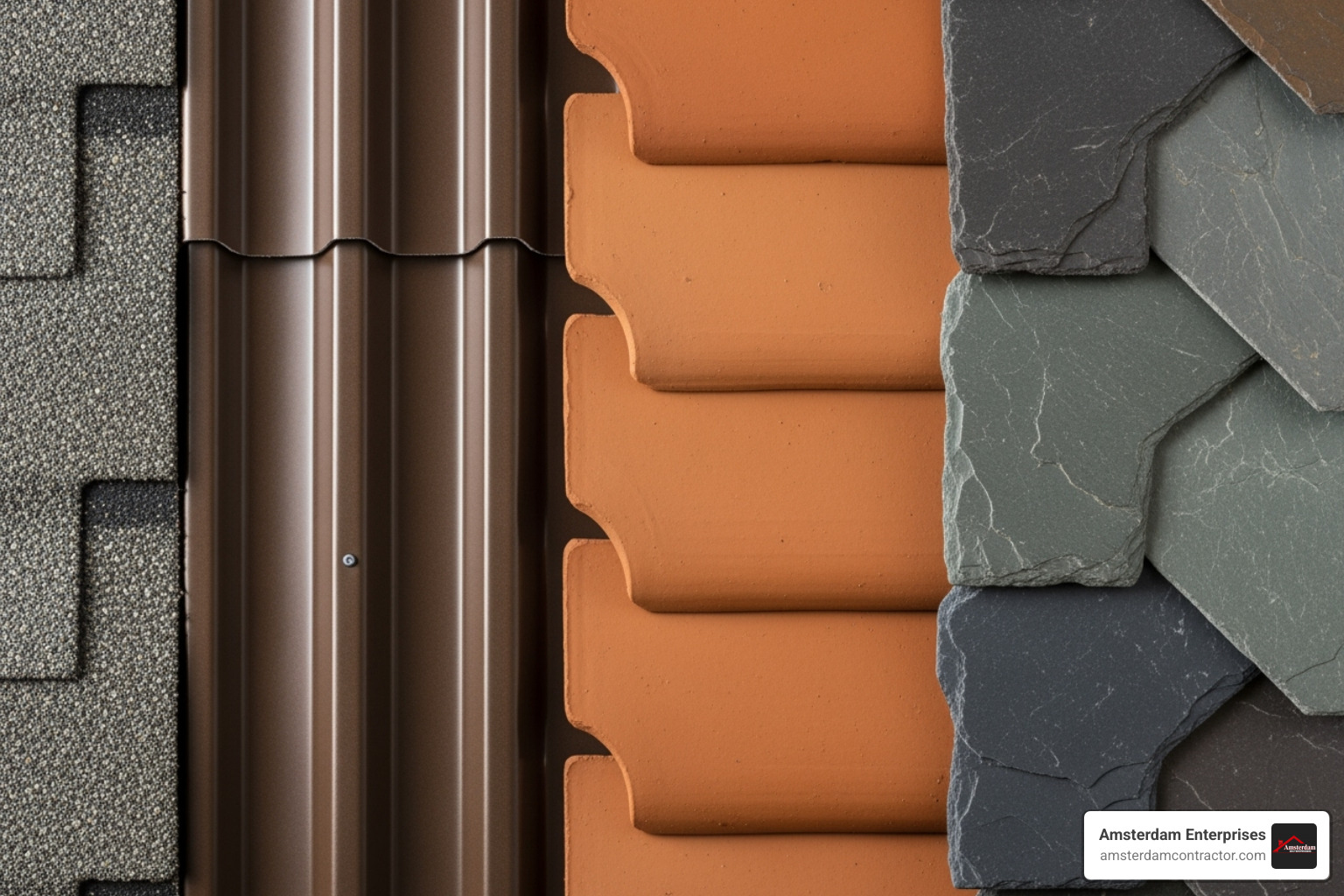
At Amsterdam Enterprises, we help homeowners steer these choices by focusing on what matters most to you. Durability determines how long your investment will last. Aesthetics play a huge role since your roof is a large part of your home’s exterior. Your local climate matters too, as materials perform differently in various weather conditions. Energy efficiency has become increasingly important for reducing utility bills. Finally, cost involves more than just upfront expenses – you’ll want to consider long-term maintenance and replacement costs too.
Asphalt Shingles: The Versatile Standard
Asphalt shingles are the most popular choice for a reason. They offer a great combination of affordability, variety, and reliable performance for nearly any home.
The cost-effectiveness of asphalt shingles makes them a practical choice. You’ll find an incredible wide variety of colors and styles to match everything from traditional colonials to modern farmhouses. Installation is also straightforward, which helps keep project costs reasonable.
The trade-off is a shorter lifespan compared to premium materials – typically 20 to 30 years. Over time, you might notice granule loss or algae growth. But for many homeowners, the lower upfront investment makes this worthwhile.
Architectural shingles have largely replaced the older 3-tab style. These dimensional shingles create beautiful texture and depth, mimicking the look of wood shakes or slate at a fraction of the cost. They’re also more durable than basic 3-tab options.
Modern asphalt shingles include impressive algae-resistance technology that prevents unsightly dark streaks and impact-resistance features to help your roof survive hail storms.
Metal Roofing: The Lifetime Investment
For a long-term solution, metal roofing is a great choice. While the upfront cost is higher, its longevity and energy savings often make it a smart financial investment.
A metal roof’s 50+ year lifespan means you’ll likely never need another roof replacement. It’s incredibly fire and moss resistant, and its energy-efficient properties can significantly reduce cooling costs. When it eventually needs replacement, metal roofing is 100% recyclable.
The higher upfront cost is the main consideration. Professional installation is essential, as metal roofing requires specialized knowledge.
Steel roofing, often coated for protection, offers excellent durability. Aluminum works beautifully in coastal areas since it resists corrosion. Copper develops a stunning patina over time but comes with a premium price tag.
Today’s metal roofing comes in virtually any color you can imagine. Modern finishes resist fading, so you’re not stuck with a “barn roof” look.
Premium & Specialty Roofing Materials
For homeowners seeking unique beauty and performance, premium materials are an excellent option.
Slate represents the pinnacle of natural roofing. Its natural beauty and extreme durability can last over a century. Each slate tile is unique, creating a sophisticated look. The high cost and specialized installation requirements make it a significant investment.
Clay and concrete tiles bring Mediterranean elegance to any home. Their longevity rivals metal roofing, often lasting 50+ years. They’re completely fireproof and perform beautifully in hot, sunny climates, where their thermal mass helps regulate temperature.
Wood shakes offer a rustic aesthetic. They provide natural insulation and weather beautifully. However, they require high maintenance with regular treatments to prevent rot, insects, and fire damage.
At Amsterdam Enterprises, we work with specialty options like Davinci Roofscapes and Brava Roofing to help you achieve the exact look you envision for your home.
When to Repair or Replace: Key Warning Signs for Your Roof
A roof’s problems aren’t always obvious. Subtle warning signs are easy to miss from the ground, but recognizing them early can save you from serious damage and costly repairs.
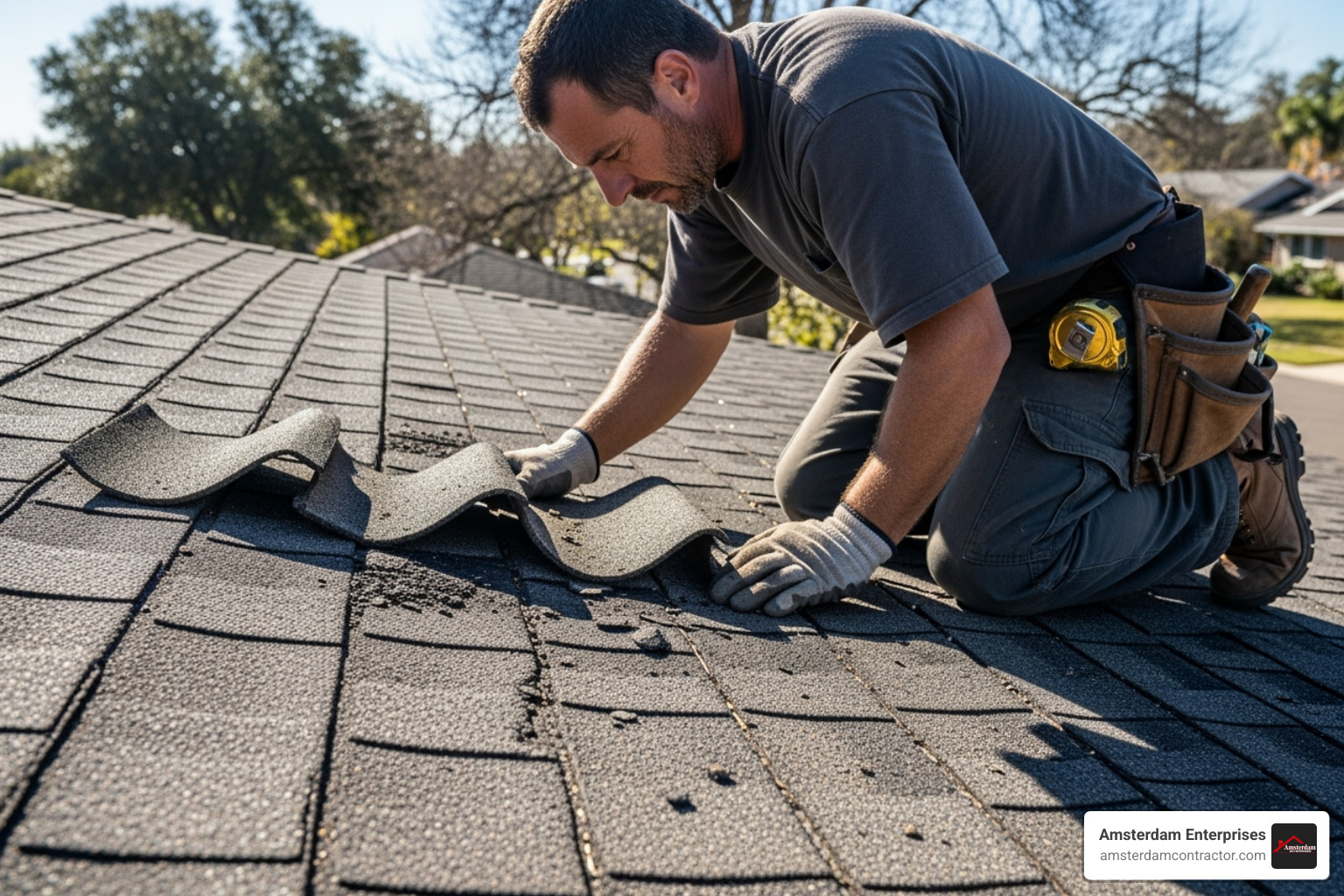
Roof age serves as your most reliable baseline indicator. An asphalt shingle roof is nearing the end of its life at 20-25 years, regardless of appearance. Even long-lasting metal roofs benefit from professional inspections as they mature. You can learn more about How Long Does a Roof Last? to understand your specific timeline.
Curled or cracked shingles tell a story of weather battles. When shingles curl at the edges or cup in the middle, they’re losing their protective seal. Visible cracks mean your roofing material has become brittle and vulnerable to wind and water.
The granule situation deserves special attention. Those tiny granules on asphalt shingles are your roof’s sunscreen, protecting it from UV rays. When you notice “bald spots” where granules have worn away, or find them collecting in your gutters, your shingles are losing their protective armor.
Moss and dark streaks might seem cosmetic, but they often signal deeper problems. Heavy moss growth or pronounced dark streaking can indicate moisture retention and ventilation issues that accelerate shingle deterioration.
A sagging roof deck is your home’s way of waving a red flag. Any noticeable dip or sag in your roofline suggests serious structural concerns, like weakened decking or rafters. This warning sign demands immediate professional attention.
Interior water damage provides the most urgent signals. Water stains on ceilings, peeling paint, or musty odors in your attic indicate that water has already breached your roofing system. Even small leaks can rapidly escalate into major problems.
If you spot these warning signs, it’s time for a professional inspection. At Amsterdam Enterprises, we can accurately assess your roof and recommend targeted Roof Repair Services or a complete Roof Replacement Services. Early intervention almost always costs less than emergency repairs.
Hiring a Pro: How to Choose the Right Roofing Contractor
Your roofing material is only as good as the installer. High-quality shingles can fail in years due to poor installation, while standard shingles can last for decades when installed by a skilled professional.
Quality installation directly impacts your roof’s performance, lifespan, and reliability. A poorly installed roof, even with premium materials, can fail prematurely, leading to leaks, repairs, and potentially starting over much sooner than planned.
At Amsterdam Enterprises, we’ve seen the aftermath of cut-rate installations, and it’s never pretty. That’s why we always tell homeowners: choosing the right contractor is just as crucial as picking the right materials.
Vetting Your Roofer: A Checklist for Homeowners
Finding a trustworthy roofing contractor doesn’t have to be overwhelming if you know what to look for. Here’s how to separate the pros from the fly-by-night operators:
Licensed and insured should be your first non-negotiable requirement. A legitimate contractor will provide proof of their state/local licenses. Just as important is insurance. Verify they have both liability insurance (to protect your property) and worker’s compensation (to protect you if a worker is injured on your roof). Ask for current certificates for verification.
Local reputation matters more than you might think. A contractor with deep roots in your community, especially here in the Chicago area, understands our specific weather challenges and local building codes. They’re also not going anywhere if you need follow-up service.
Reviews and references tell the real story. Check Google, Yelp, and definitely verify with the Better Business Bureau for ratings and complaint history. But don’t stop there – ask for recent customer references and actually call them.
Detailed written estimates separate professionals from amateurs. Your estimate should break down material costs, labor, permits, cleanup, and timeline. If someone gives you a verbal quote or a number on a business card, keep looking.
Portfolio review gives you insight into their craftsmanship. Ask to see photos of recent projects, ideally on homes similar to yours. Quality work speaks for itself.
Understanding Roofing Warranties
A new roof represents a major investment, so understanding your warranty protection is essential. You’ll typically encounter two types of coverage, and both matter.
Manufacturer’s warranty covers the actual roofing materials against defects. These vary widely – some basic shingles might have 20-year coverage, while premium metal roofing can include 40-year paint integrity guarantees.
Contractor’s workmanship warranty protects you against installation errors. This is why choosing an experienced contractor like Amsterdam Enterprises matters so much. Our decades of experience mean we stand behind our installation work, typically offering warranties ranging from 5 to 25 years.
System warranties offer the most comprehensive protection. Some manufacturers provide extended coverage when you use their complete system – shingles, underlayment, and ventilation – installed by certified contractors. These can provide superior protection and peace of mind.
Always get warranty details in writing before work begins.
Visualize Your New Roof Before You Commit
Choosing your new roof’s appearance used to mean crossing your fingers and hoping for the best. Not anymore. Modern technology lets you see exactly how different materials and colors will look on your specific home.
Online visualizer tools have revolutionized the selection process. Many leading manufacturers offer platforms where you can upload a photo of your home and experiment with various options. Want to see how that charcoal shingle will look against your brick siding? These tools make it easy.
Experiment with a home design tool to explore different CertainTeed shingle options on your actual home. This technology takes the guesswork out of color and style decisions, ensuring your new roofing perfectly complements your home.
Frequently Asked Questions about Roofing
When homeowners start thinking about roofing projects, certain questions come up again and again. After decades in the business, we’ve learned that getting clear, honest answers upfront helps you feel confident about this important investment. Here’s what we hear most often.
How much does a new roof cost?
This is always the first question. A new roof is a significant investment, and the cost varies based on your specific situation.
Your material choice makes the biggest difference. Asphalt shingles are the most budget-friendly, while metal roofing requires a higher upfront investment for its 50-plus year lifespan. Premium materials like slate or tile cost even more initially.
Roof size and pitch directly impact your final cost. A larger or steeper roof needs more materials and labor, increasing the price due to complexity and safety requirements.
Your location matters. Local labor rates, material availability, and building requirements all influence costs. Working with a local contractor means we understand the factors affecting pricing in our area.
The contractor you choose will also impact your investment. Different companies have varying overhead, experience, and quality standards. We recommend getting detailed estimates from multiple contractors to compare apples to apples.
Finally, a full tear-off versus overlay affects the bottom line. Removing your existing roof adds labor and disposal costs, but it’s usually the right choice for long-term performance.
We believe in transparent pricing and provide detailed quotes that break down exactly what you’re paying for.
How long does a roof replacement take?
Most homeowners are surprised by how quickly a roof replacement can be. For a typical home, the process takes just 1 to 3 days.
Several factors can influence this timeline. Weather is the biggest wildcard – we never compromise safety by working in dangerous conditions like rain or high winds.
Your roof’s complexity plays a big role. A simple ranch-style home is faster than a house with multiple peaks, valleys, or steep sections that require more careful work.
Material type affects timing. Asphalt shingle installation is efficient, while metal, slate, or tile requires more time per piece.
A tear-off or overlay also impacts the schedule. Removing your old roof adds a step, but it’s usually worth it for the long-term results.
Our experienced crews work efficiently while maintaining high quality standards to minimize disruption.
Can I put a new roof over my old one?
Technically, yes, you can sometimes install new shingles over an existing layer (an “overlay”). This can save on initial costs, but we rarely recommend it for several key reasons.
An overlay can hide underlying deck problems like rot or soft spots. We can’t inspect the deck, and these issues don’t go away just because you cover them up.
Adding weight is another concern. Each shingle layer adds significant load to your roof structure. Most homes can handle two layers maximum, but exceeding this can stress your home’s frame.
Many manufacturers may void warranties if their products are installed over existing roofing, as it can affect how the new materials perform.
From an aesthetics and performance standpoint, overlays often don’t look as smooth. You also miss the chance to install new underlayment, a crucial part of a modern roofing system.
At Amsterdam Enterprises, we typically recommend a full tear-off. It allows proper inspection and ensures optimal performance from your new roofing system.
Conclusion: Protect Your Home with a Quality Roof
Your roof is your home’s most important shield. As we’ve explored, it’s a sophisticated systemnot just shingleswhere every component works together. From the roof deck to the ventilation, each element is crucial for protecting your home.
The material you choose – whether it’s cost-effective asphalt shingles, long-lasting metal roofing, or premium slate – should align with your priorities. Are you looking for a budget-friendly option? Asphalt shingles might be your answer. Want a roof that’ll outlast your mortgage and save on energy bills? Metal roofing could be the perfect investment. Dreaming of a timeless, neat look? Premium materials might be worth the splurge.
However, even the best materials will fail without professional installation. A poorly installed roof, regardless of the materials, can lead to leaks, premature wear, and costly repairs.
At Amsterdam Enterprises, we know a new roof is more than an improvementit’s peace of mind. It’s knowing your family is protected during storms, adding value and curb appeal to your home, and helping keep energy costs manageable.
A quality roof is an investment in your home’s safety, value, and beauty. It’s protection you can count on for decades when done right. Our team brings decades of experience to every project, whether it’s a complete Roof Installation Services or targeted Roof Repair Services.
Ready to take the next step? We’d love to help you explore your options and find the perfect roofing solution for your home. Get a free, no-obligation roofing estimate today and find how the right roof can transform your home’s protection and appearance for years to come.