


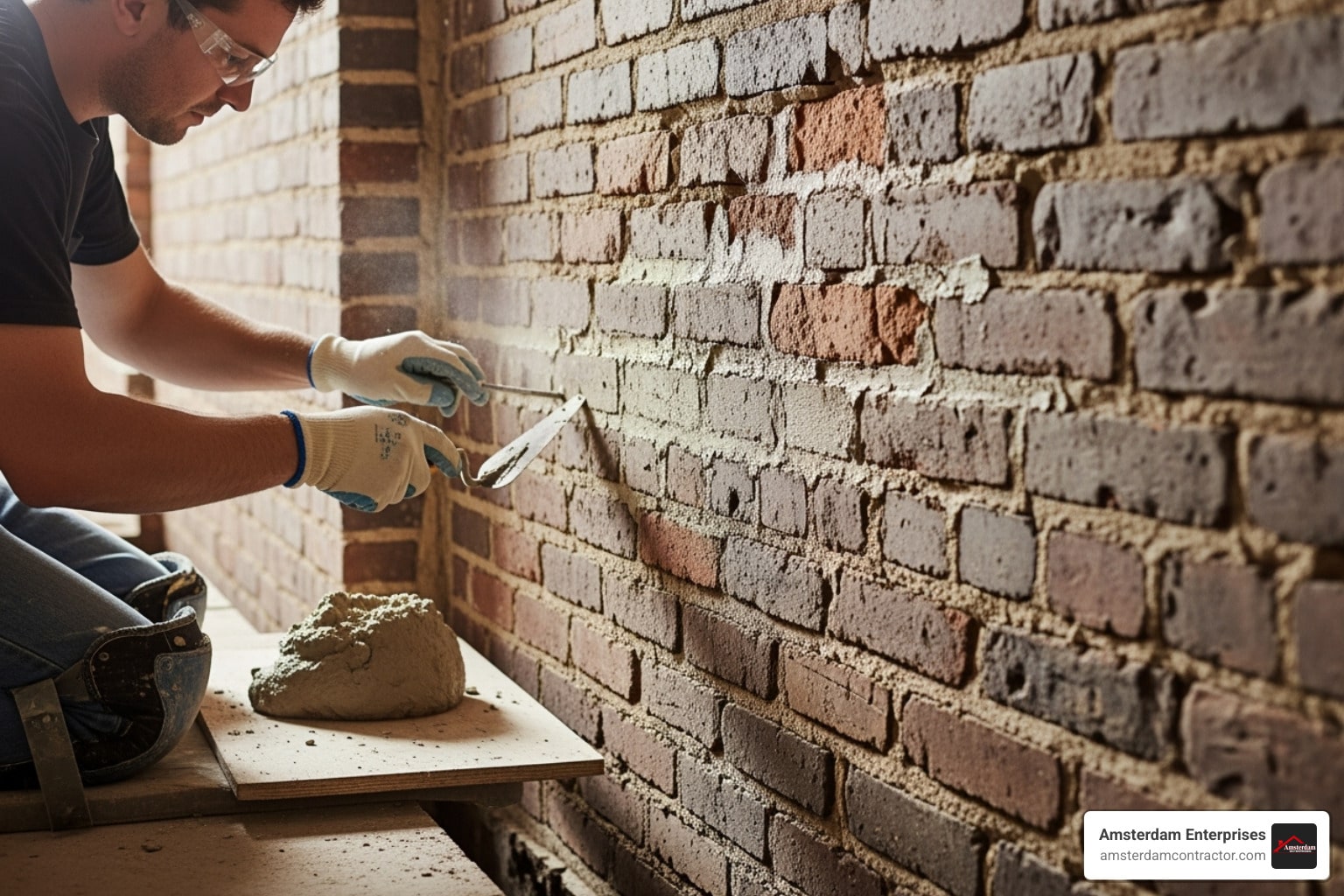
How much does it cost to tuckpoint a 30 bricks: Smart Guide
Understanding the Cost of Small Brick Tuckpointing Jobs
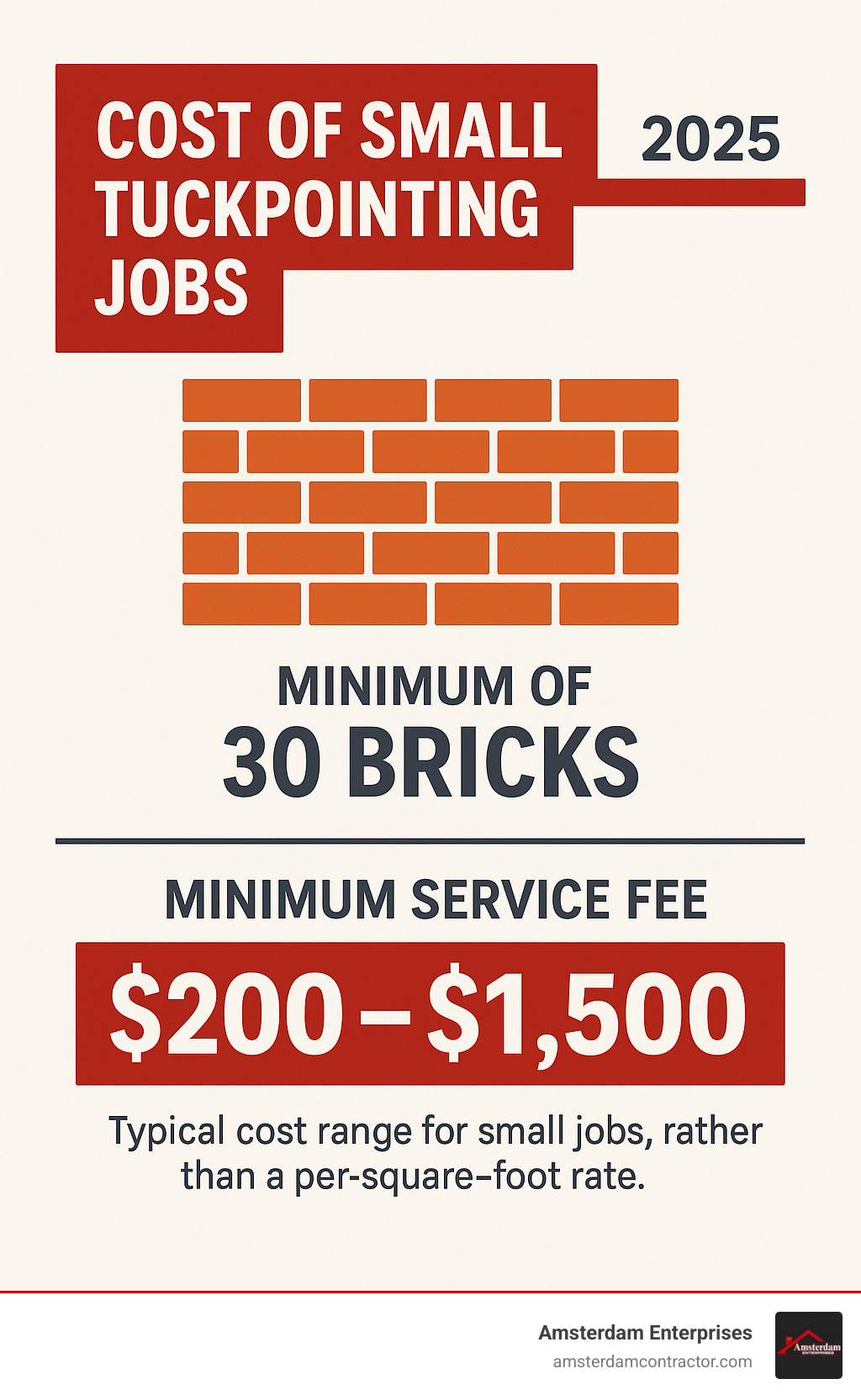
When considering how much does it cost to tuckpoint a 30 bricks, it’s important to know that most contractors have a minimum service fee. For a small area like 30 bricks, which is roughly 4.5 square feet, you will almost certainly fall into this minimum charge, rather than a per-square-foot rate.
- Average Minimum Job Fee: $200 to $600
- Wider Range for Minimums: $200 to $1,500 (depending on contractor, location, and project specifics)
- Per-Square-Foot Cost: $5 to $25 (This rate applies to larger jobs, not small patches.)
Tuckpointing is a vital process for brick homes. It involves repairing the mortar joints between bricks. Over time, these joints can crumble, crack, or erode due to weather and age. Fixing them keeps your home strong, prevents water damage, and makes it look much better.
With decades of experience and leadership, I’ve built a reputation for excellence in exterior services. My expertise covers all aspects of brick repair, including understanding how much does it cost to tuckpoint a 30 bricks, ensuring the highest quality and customer satisfaction for your home.
What is Tuckpointing and Why is it Necessary?
To understand the value of masonry repair, it’s helpful to know the difference between tuckpointing and repointing. While often used interchangeably, they are distinct processes.
Repointing is the functional repair of removing old, worn-out mortar and replacing it with new mortar. This restores a wall’s structural integrity and weather resistance.
Tuckpointing is a more specialized, aesthetic technique. It involves filling the joint with mortar that matches the brick color, then applying a thin, contrasting line of putty on top. This creates the illusion of very fine, precise joints. While repointing is purely for repair, tuckpointing adds a decorative finish. For this article, we’ll use “tuckpointing” to cover all mortar joint repair, as it’s the more common term.
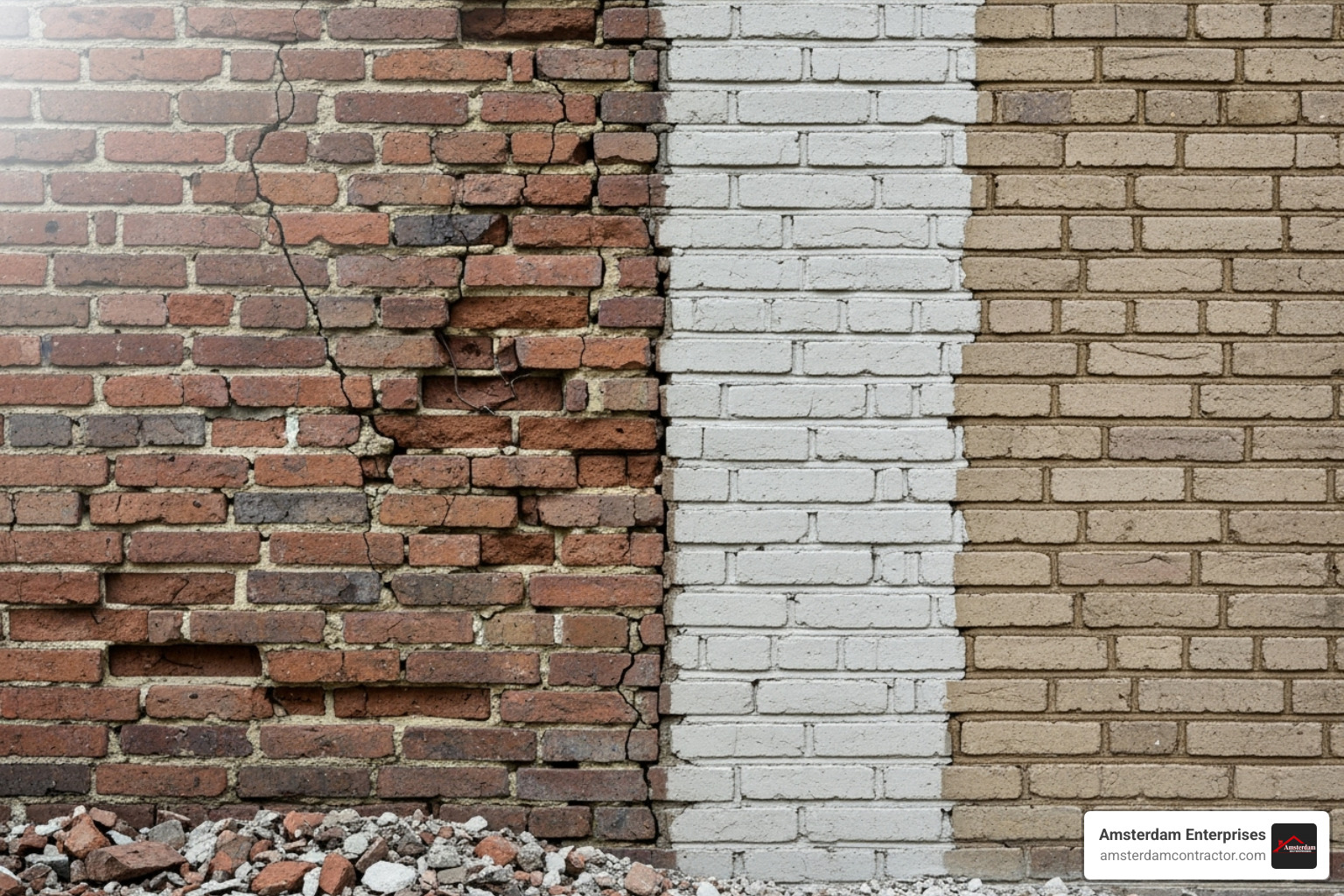
So, why is tuckpointing necessary? While bricks can last a century, the mortar joints between them have a shorter lifespan, typically showing wear after 20 to 30 years. These joints are crucial for flexibility and protecting your home from the elements. When mortar cracks or crumbles, it creates pathways for water to enter your walls, leading to a host of problems, including:
- Water damage: Moisture can seep into interior walls, causing discoloration, mold, and structural rot.
- Freeze-thaw damage: In colder climates, absorbed water freezes and expands, forcing bricks to crack and spall (flake or peel), which accelerates deterioration.
- Reduced thermal efficiency: Gaps in mortar allow drafts into your home, increasing heating and cooling bills.
- Aesthetic decline: Crumbling mortar and damaged joints diminish your home’s curb appeal and value.
Regular tuckpointing keeps your brickwork strong, weather-resistant, and visually appealing. It’s a proactive maintenance step that stops small issues from becoming costly structural problems. For historical properties, it’s crucial to follow guidelines like those from The U.S. Secretary of the Interior’s Standards for The Treatment of Historic Properties to preserve the building’s character.
Signs Your Brickwork Needs Attention
Keep an eye out for these tell-tale signs that your masonry needs repair:
- Crumbling Mortar: If you can easily scrape away mortar or see sandy piles at the base of your walls, it’s time for repair. Mortar erosion over 6 mm is a clear indicator.
- Hairline Cracks: Small cracks in mortar joints hint at deterioration and can widen if ignored, leading to bigger issues.
- Gaps Between Bricks: Visible gaps between bricks and mortar mean the bond has failed, allowing water and air to enter.
- Spalling (Flaking Bricks): If brick faces are flaking or peeling, it’s often a symptom of water intrusion from freeze-thaw cycles, usually caused by failing mortar joints.
- Damp Patches on Interior Walls: This is a serious red flag. Dampness or mold on interior walls next to exterior brick strongly indicates significant mortar failure.
- Loose Bricks: If bricks feel wobbly, their mortar bond is severely compromised and needs immediate attention.
Acting on these signs quickly is crucial. A small issue today can become a much larger, more expensive repair. Catching problems early can save you from needing a full rebuild. For more detailed information on keeping your home’s exterior in top shape, explore More info about our Masonry Services.
How Much Does It Cost to Tuckpoint a 30 Bricks? Breaking Down Small Repair Costs
Now, let’s get to the nitty-gritty: how much does it cost to tuckpoint a 30 bricks? While many cost guides provide per-square-foot estimates, for a very small job like 30 bricks, this metric can be misleading. Thirty standard bricks, depending on their size and joint width, typically cover an area of about 4.5 to 5 square feet. At an average per-square-foot cost of $5 to $25, this would theoretically put the cost between $22.50 and $125. However, that’s almost never the actual price you’ll pay.
Why? Because masonry contractors, like many skilled trades, have minimum job fees. These fees cover the fixed costs associated with taking on any project, no matter how small. These include travel time, setting up equipment, administrative work, insurance, and the basic labor required to even begin the work.
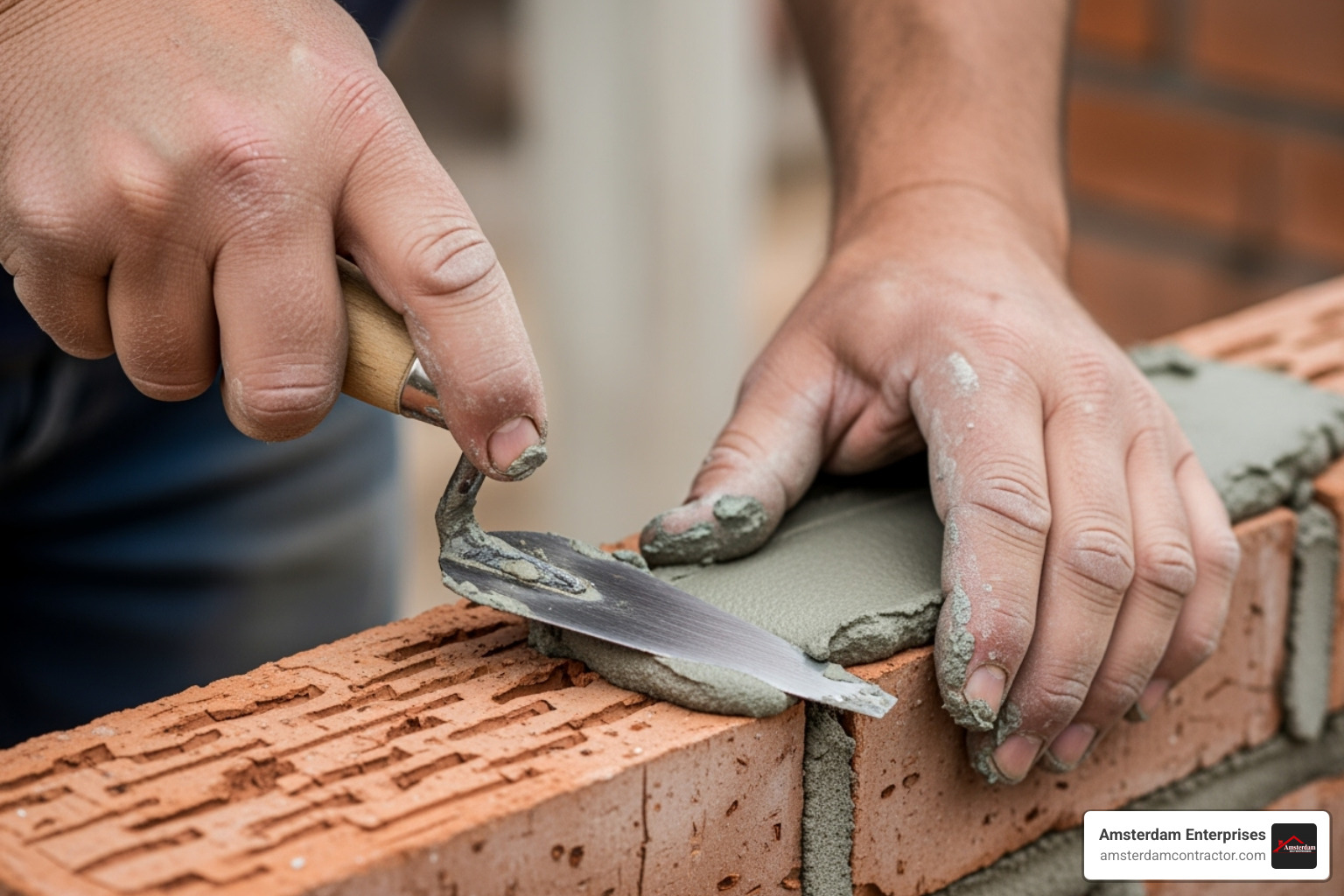
Masons typically charge $50 to $125 per hour for repointing or tuckpointing. While materials for such a small patch are negligible, the labor and overhead are not. Most brick masons charge a minimum job fee ranging from $200 to $1,500. This means for a minor repair of 30 bricks, you should expect to pay within this minimum range, rather than a direct per-square-foot calculation.
For example, a 20-square-foot wall might cost $100 to $200 in labor (assuming 2 hours at $50-$100/hr) plus materials. However, if that’s the only work needed, the contractor’s minimum job fee would apply.
The Minimum Fee: The Real Answer to “how much does it cost to tuckpoint a 30 bricks”
The true answer to how much does it cost to tuckpoint a 30 bricks almost always boils down to the contractor’s minimum fee. This minimum charge is essentially a “service call” fee for masonry work. It ensures that even for minor repairs, the contractor can cover their operational costs and make it worthwhile to mobilize their crew and specialized equipment.
Typical minimums for tuckpointing jobs can range from $200 to $600. For some highly specialized or in-demand masons, or in regions with higher labor costs (like the Chicago area where we serve, including Arlington Heights, Barrington, and Chicago itself), this minimum could even reach $1,500.
It’s crucial to understand why per-brick pricing isn’t used for such small quantities. A mason can lay hundreds of bricks in a day for new construction. But tuckpointing is a meticulous repair process that involves careful removal of old mortar (often to a depth of 3/4 inch), precise mixing of new mortar, and skillful application to match existing joints. This isn’t about speed; it’s about precision and quality. The economics of a small job mean that the overhead and preparation time often outweigh the actual time spent on the 30 bricks themselves. So, while you might only need a tiny patch, you’re paying for the specialized skill and the contractor’s time to get to your site and set up.
Factors That Affect the Cost to Tuckpoint a 30 Bricks
Even for a small area of 30 bricks, several factors can influence where your project falls within that minimum fee range:
- Accessibility (Height and Location): This is a huge cost driver. If your 30 bricks are at ground level on an easily accessible wall, the cost will be on the lower end of the minimum fee. However, if they are on a second-story wall, near a chimney, or in a tight, awkward space, the cost will increase. Walls above 8 feet often require scaffolding, which can add 20% to 40% to the cost. For instance, tuckpointing a small section of a chimney is often more expensive than a similar-sized area on a ground-level wall due to the added risk and effort involved in working at height.
- Mortar Matching (Color and Composition): A good mason will strive to match your existing mortar not just in color, but also in composition (e.g., Type N, S, M, or O, or lime-based). This is vital for both aesthetics and the long-term health of your wall. Matching involves careful analysis and can sometimes require custom mortar mixes, which adds to the material and labor cost. For historic homes, using the wrong type of mortar can cause more damage than good, making a mortar composition analysis (which can cost $100 to $500) a worthwhile investment.
- Underlying Brick Damage: If the mortar is crumbling, it’s possible some of the bricks themselves are also damaged (e.g., spalling, cracked, or loose). Before new mortar can be applied, any damaged bricks must be repaired or replaced. Brick repair can cost $20 to $40 per square foot, significantly increasing the overall project cost, even for a small area.
- Scaffolding Needs: As mentioned, if the 30 bricks are high up, the need for scaffolding, lifts, or specialized safety equipment will add a premium to the job. This is particularly true for our service areas in places like Glenview, Long Grove, or Northbrook, where homes often feature multi-story brick facades.
- Type of Mortar: While common Portland cement mortar is standard, older homes often used lime-based mortars. Lime mortar can be about 10% more expensive than Portland cement.
- Time of Year/Weather: Masonry work is best done when temperatures are consistently between 40°F and 90°F. Working outside of this range (e.g., in winter) can require special precautions, heating, or additives, increasing the cost.
Understanding these factors helps explain why a seemingly small job can still incur a significant cost. It’s about the expertise, the setup, and the specific challenges of your project. For a detailed and accurate estimate custom to your specific needs, we encourage you to Contact Us today.
DIY vs. Hiring a Professional for Minor Brick Repair
For a small job like repairing 30 bricks, you might wonder whether to DIY or hire a pro. The decision involves more than just initial cost; consider your skill level, time commitment, the potential for error, and the long-term durability of the repair. Tuckpointing is a precise skill requiring the right tools and knowledge of mortar types. A DIY approach saves on labor but risks poor results and long-term damage. Using the wrong mortar, for instance, can cause cracking, spalling, and even deeper structural issues.
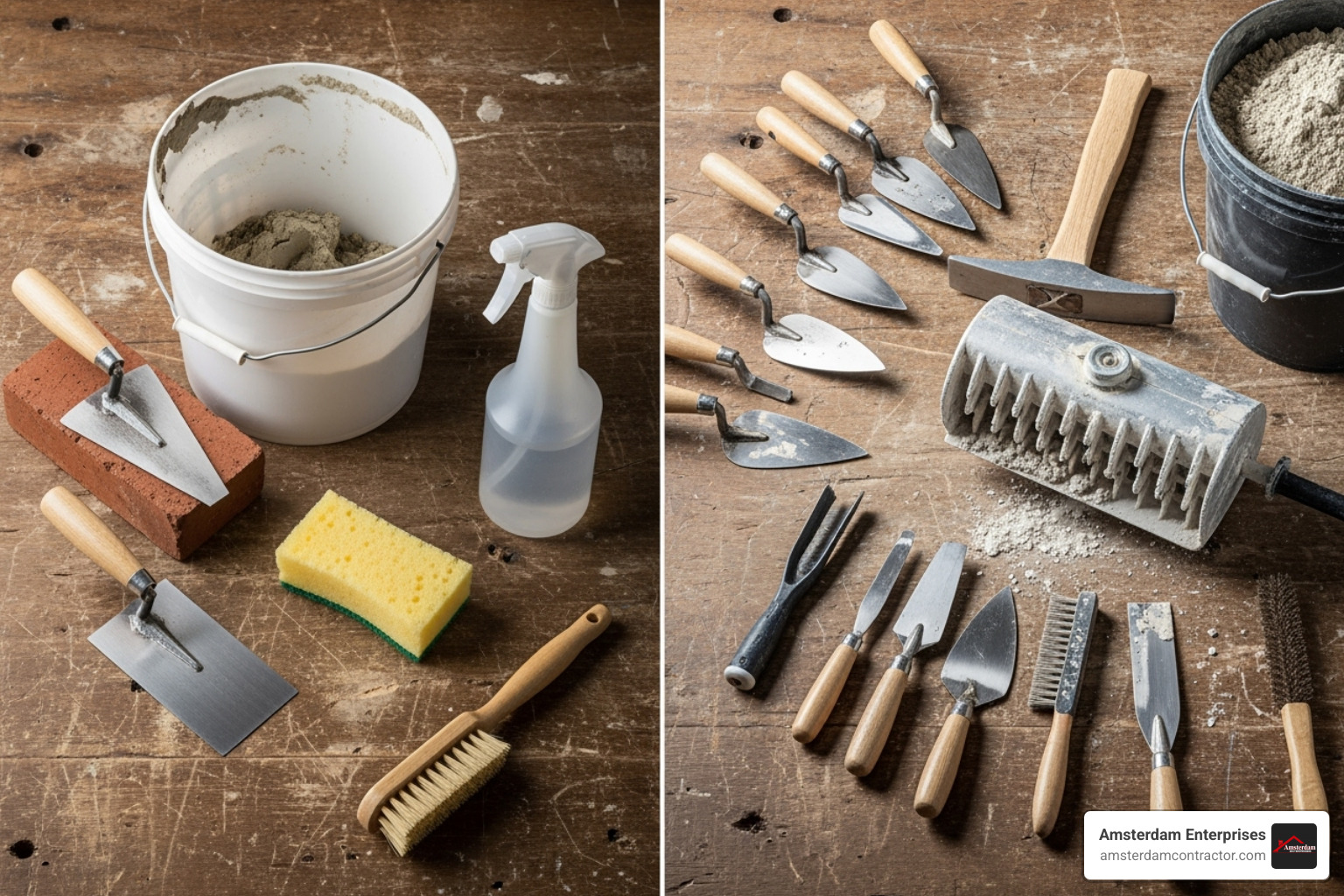
The DIY Tuckpointing Approach
A homeowner with solid DIY experience might tackle a tiny, ground-level repair. Here’s a look at the required tools, materials, and challenges.
Your essential tools would include a pointing trowel, mortar hawk, grout bag, joint raker or grinder, and a stiff brush. Always wear safety glasses, gloves, and a dust mask.
For materials, you’ll need pre-mixed mortar (ensure it’s the right type for your bricks!), water, and possibly mortar colorant to match the existing shade.
The process involves removing old mortar to a depth of about 3/4 inch, cleaning the joints, wetting the brick, mixing and applying new mortar, and tooling the joints for a finished look. New mortar needs 36 to 48 hours to cure, a process affected by temperature.
Even with the right tools, achieving a professional, long-lasting finish is difficult. Matching the existing mortar’s color, texture, and composition is crucial. For a more detailed guide, you can check out A guide to DIY tuckpointing.
When to Call a Professional Mason
For anything beyond a minor, easily accessible repair, hiring a professional is the smartest move to avoid costly mistakes. Here are clear signs it’s time to call an expert:
- Structural Issues: Bowing walls, large cracks that run through the bricks themselves, or many loose bricks are signs of a deeper problem that a professional must assess.
- Historic Properties: Homes built before 1930 often used softer bricks and lime-based mortars. Using modern, hard cement can damage the original bricks, so a specialist with knowledge of traditional materials is essential.
- Hard-to-Reach Areas: Jobs requiring work on chimneys, multi-story walls, or scaffolding (above 8 feet) are dangerous and should be left to licensed, insured professionals with the right safety equipment and training.
- Desire for a Perfect Aesthetic Match: A professional mason has the trained eye and skill to make the repair blend seamlessly with your existing brickwork.
- Ensuring Proper Mortar Composition: A professional will analyze the existing mortar to create a compatible mix. Using the wrong type, especially on older homes, can damage the original bricks.
- Peace of Mind and a Warranty: Reputable companies, like Amsterdam Contractor, are licensed, insured, and back their work with a warranty, protecting you against future issues.
While the DIY route might seem cheaper when you’re thinking about how much does it cost to tuckpoint a 30 bricks, the potential for costly mistakes makes hiring a professional a worthwhile investment for the long-term health and appearance of your brick home.
How to Get an Accurate Tuckpointing Quote
Once you’ve decided to hire a professional for your tuckpointing project, the next step is to obtain accurate and comprehensive quotes. This is a critical stage in ensuring you get quality work at a fair price. We always recommend getting at least three estimates from different contractors. This allows you to compare not just prices, but also the scope of work, suggested solutions, and the professionalism of each company.
When obtaining quotes, ensure that each contractor is licensed, bonded, and insured. This protects you from liability in case of accidents or damage during the project. Always insist on a detailed, written estimate. A verbal quote is simply not enough. The written estimate should clearly outline:
- The specific areas to be tuckpointed (e.g., “30 bricks on the north wall, ground level”).
- The type of mortar to be used.
- The method of mortar removal (e.g., hand chiseling or electric grinder).
- Whether any brick repair or replacement is included.
- Costs for scaffolding or special equipment.
- A clear statement on debris cleanup and removal from your property.
- The estimated project timeline.
- The payment schedule (e.g., deposit, progress payments, final payment upon completion).
- Any warranty offered on the work.
A lower price isn’t always the best value. A quote that seems significantly cheaper than others might indicate a contractor cutting corners, using inferior materials, or not including essential parts of the job (like cleanup!). Knowing what’s included and what’s not will prevent unpleasant surprises down the line.
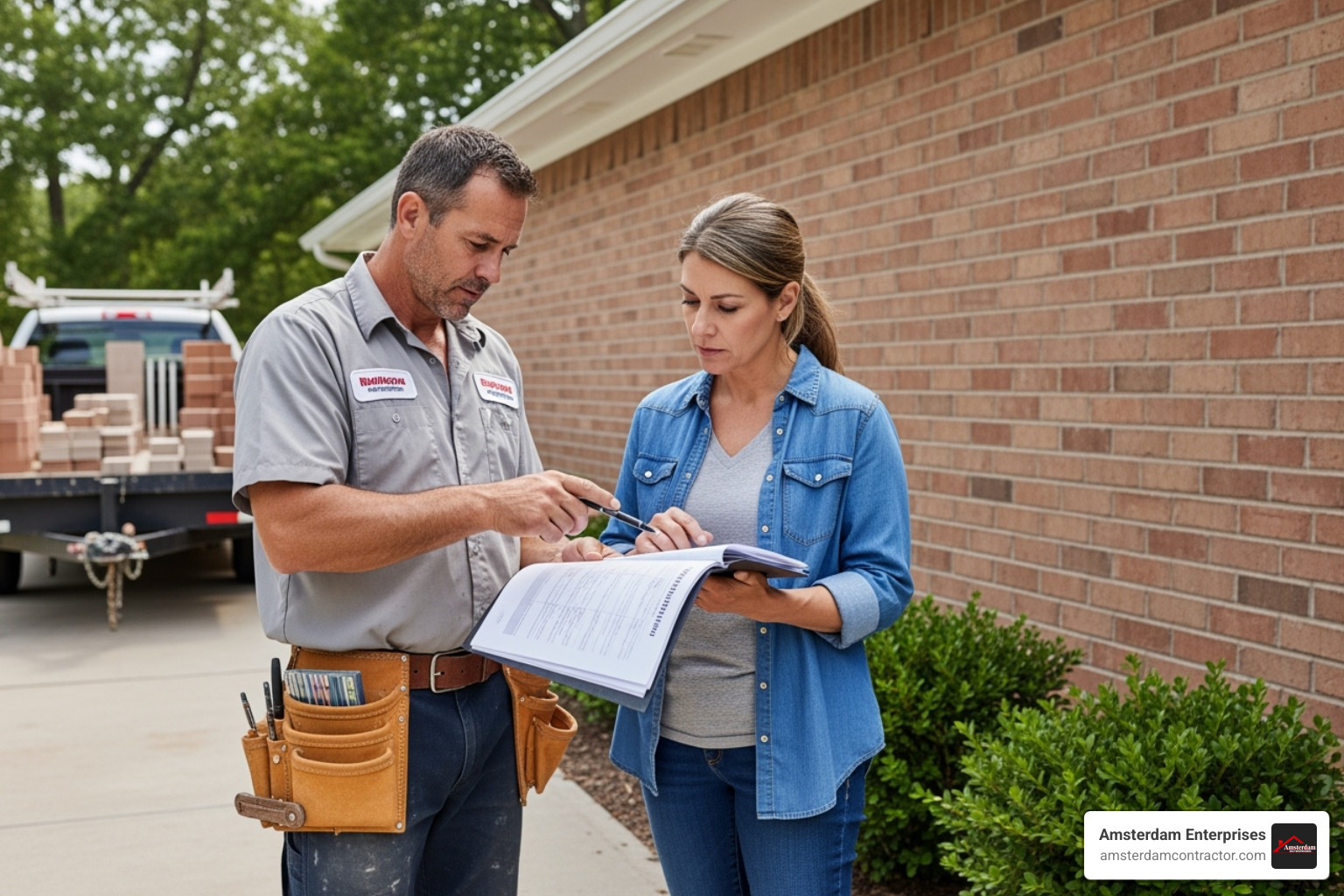
Questions to Ask Your Masonry Contractor
To ensure you’re hiring the right professional and getting a transparent quote, we encourage you to ask these key questions:
- Are you certified by the Mason Contractors Association of America (MCAA)? While not all masons are MCAA certified, asking about certifications or memberships in local masonry unions demonstrates their commitment to industry standards and ongoing training. Always verify they are licensed, bonded, and insured.
- What type of mortar will you use and why? A knowledgeable contractor will explain their choice, ideally matching the original mortar’s strength, composition, and porosity. For older homes, this is non-negotiable.
- Will the new mortar match the color of the existing mortar? Discuss color matching. Some contractors may offer samples or test patches.
- Is cleanup included in the quote? Confirm that all debris, dust, and excess mortar will be removed from your property upon completion.
- What is your project timeline? Get an estimated start and completion date. Ask how they handle unexpected delays due to weather or unforeseen issues.
- How do you handle unexpected project delays or damages? A reputable contractor will have a clear policy for unforeseen circumstances.
- Do you offer a warranty on your work? A warranty provides protection and peace of mind. Professional tuckpointing should last 25 to 30 years, so inquire about the lifespan they guarantee.
- How much experience do you have tuckpointing or repointing? Ask about their experience, especially with projects similar to yours. Request references or a portfolio of their previous work.
- Does my brick need tuckpointing or repointing, and why do you recommend one versus the other? This question helps gauge their understanding of the distinct processes and their recommendation for your specific needs.
- Will you provide a detailed, written estimate? Reiterate the need for a comprehensive, written document.
- What are your payment terms? Understand the payment schedule. Never pay the full amount upfront; a typical schedule involves a deposit, progress payments, and a final payment upon satisfactory completion.
By asking these questions, you’ll gain a clearer understanding of the contractor’s expertise, their proposed approach, and the total cost involved. This due diligence is essential for a successful tuckpointing project, whether it’s for how much does it cost to tuckpoint a 30 bricks or a full facade.
Conclusion
When you’re wondering how much does it cost to tuckpoint a 30 bricks, the reality is that you’ll likely pay a contractor’s minimum service fee rather than a per-brick rate. These minimums typically range from $200 to $1,500, depending on your location and the specific challenges of your project. Even though you’re only fixing a small area, you’re paying for specialized masonry skills, professional equipment, and the contractor’s time to properly assess and repair your brickwork.
But here’s the thing – tuckpointing isn’t just about making your home look prettier (though it certainly does that). It’s about protecting your investment and preventing much bigger headaches down the road. Those mortar joints between your bricks are working hard every day, keeping water out and holding everything together. When they start to fail, water finds its way in, and that’s when the real trouble begins.
Think of it this way: spending a few hundred dollars now on proper tuckpointing can save you thousands later. Water damage, structural issues, and major brick repairs are all expensive problems that start with ignored mortar joints. Timely repair is one of the smartest investments you can make in your home’s future.
We get it – the idea of fixing just 30 bricks yourself might seem tempting, especially when you’re looking at that minimum fee. But masonry work requires precision, the right materials, and years of experience to get it right. Using the wrong mortar or applying it incorrectly can actually make things worse. For most homeowners, hiring a professional is the wisest choice for long-term value and peace of mind.
At Amsterdam Contractor, we’ve been helping homeowners throughout the Chicago area protect and beautify their brick homes for years. We understand that every repair, no matter how small, matters to you and your home’s future. Our team serves communities from Arlington Heights to Wood Dale, bringing the same attention to detail whether we’re working on 30 bricks or an entire facade.
Your brick home is built to last generations, but only with proper care and maintenance. Don’t let small problems become big ones. For professional and reliable brick repair that you can trust, explore our expert masonry services. We’re here to help you keep your home strong, beautiful, and protected for years to come.