


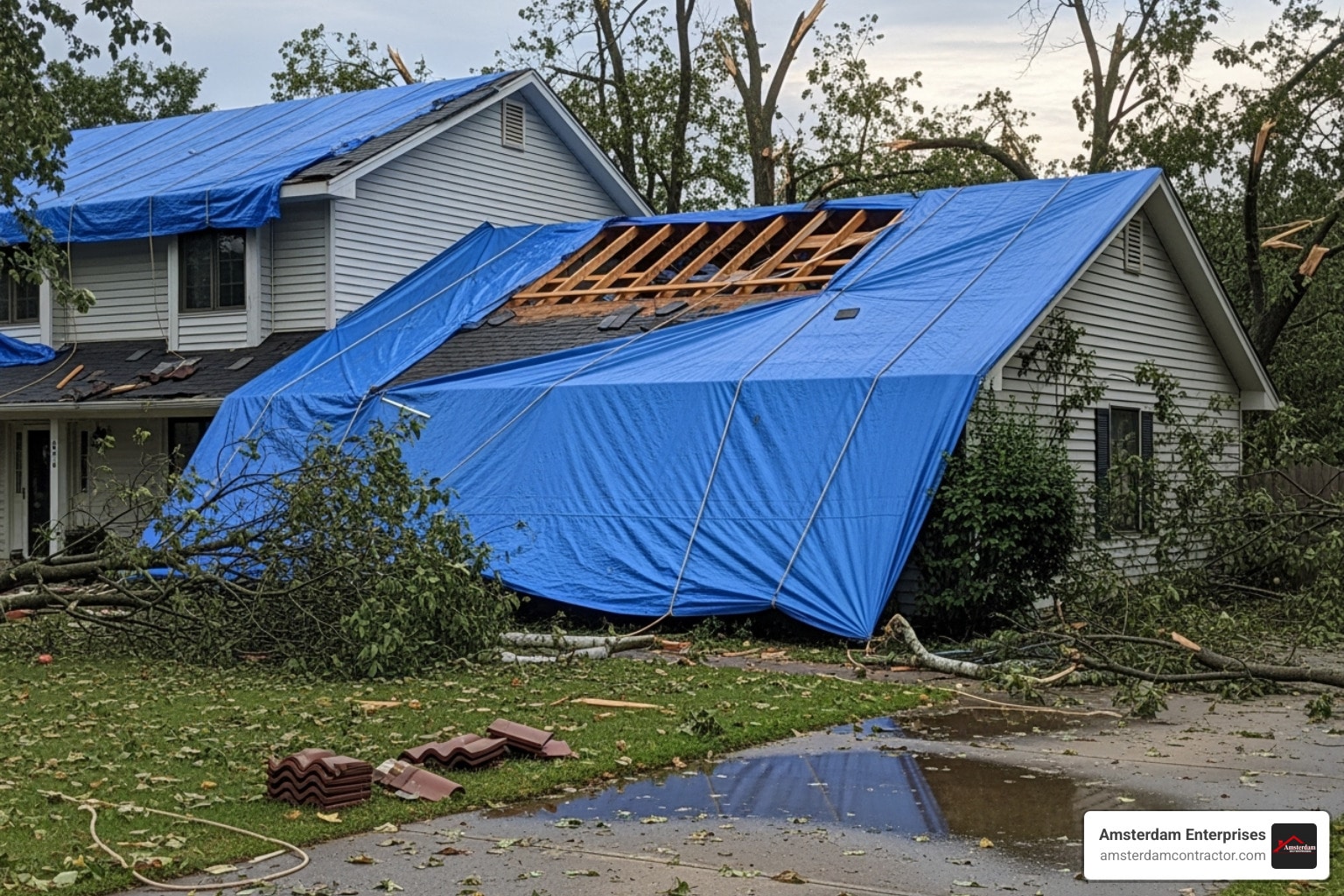
Emergency Roof Tarping: 1st Critical Step Fast
Why Emergency Roof Tarping is Your Home’s First Line of Defense
Emergency roof tarping is a critical, immediate response that protects your home from further damage after a storm or sudden roof failure. Here’s what you need to know:
- What it is: A heavy-duty waterproof tarp professionally installed over damaged sections of your roof
- When you need it: After storm damage, missing shingles, fallen trees, visible holes, or active leaks
- Why it matters: Prevents water intrusion, mold growth, ceiling collapse, and structural damage
- How long it lasts: 60-90 days as a temporary measure before permanent repairs
- Average cost: $175-$700 for professional installation, with emergency rates of $1.00-$2.80 per square foot
- Insurance: Typically covered by homeowners insurance as a “reasonable repair” to prevent further damage
When severe weather damages your roof, it becomes an open door for water and debris. A few missing shingles can quickly escalate into thousands in interior water damage, ruined insulation, and dangerous mold. Emergency roof tarping acts as a protective shield for your home when the roof is compromised.
Think of it as critical first aid for your home—it’s not the permanent fix, but it’s the essential step that prevents a bad situation from becoming catastrophic. A properly installed tarp protects your home for up to 90 days, giving you time to schedule permanent repairs without watching your interior suffer.
I’m Gerard Stencel, and with decades of experience, I’ve seen how proper tarping prevents devastating losses. At Amsterdam Enterprises, we provide rapid, professional emergency roof tarping services to protect Chicago-area homes when they need it most.
Why Immediate Roof Tarping is a Non-Negotiable First Step
When your roof is damaged, every minute counts. A compromised roof can cause a domino effect of problems that cost thousands if left unchecked.
When is it appropriate to tarp a roof?
You need emergency roof tarping any time your roof’s integrity has been breached.
Storm damage is the most common cause. High winds rip off shingles, hail creates punctures, and heavy rain exploits every weak spot. Even minor-looking damage can cause serious leaks.
Fallen trees or large debris create obvious breaches that need immediate covering. Missing shingles are just as serious, exposing the underlayment, which isn’t designed for direct weather exposure.
Visible holes or punctures are open doors for water. If you’re already seeing active leaks or water stains, you’re watching damage happen in real time. Every hour without protection means more destruction. The bottom line: if your roof can’t keep water out, you need a tarp.
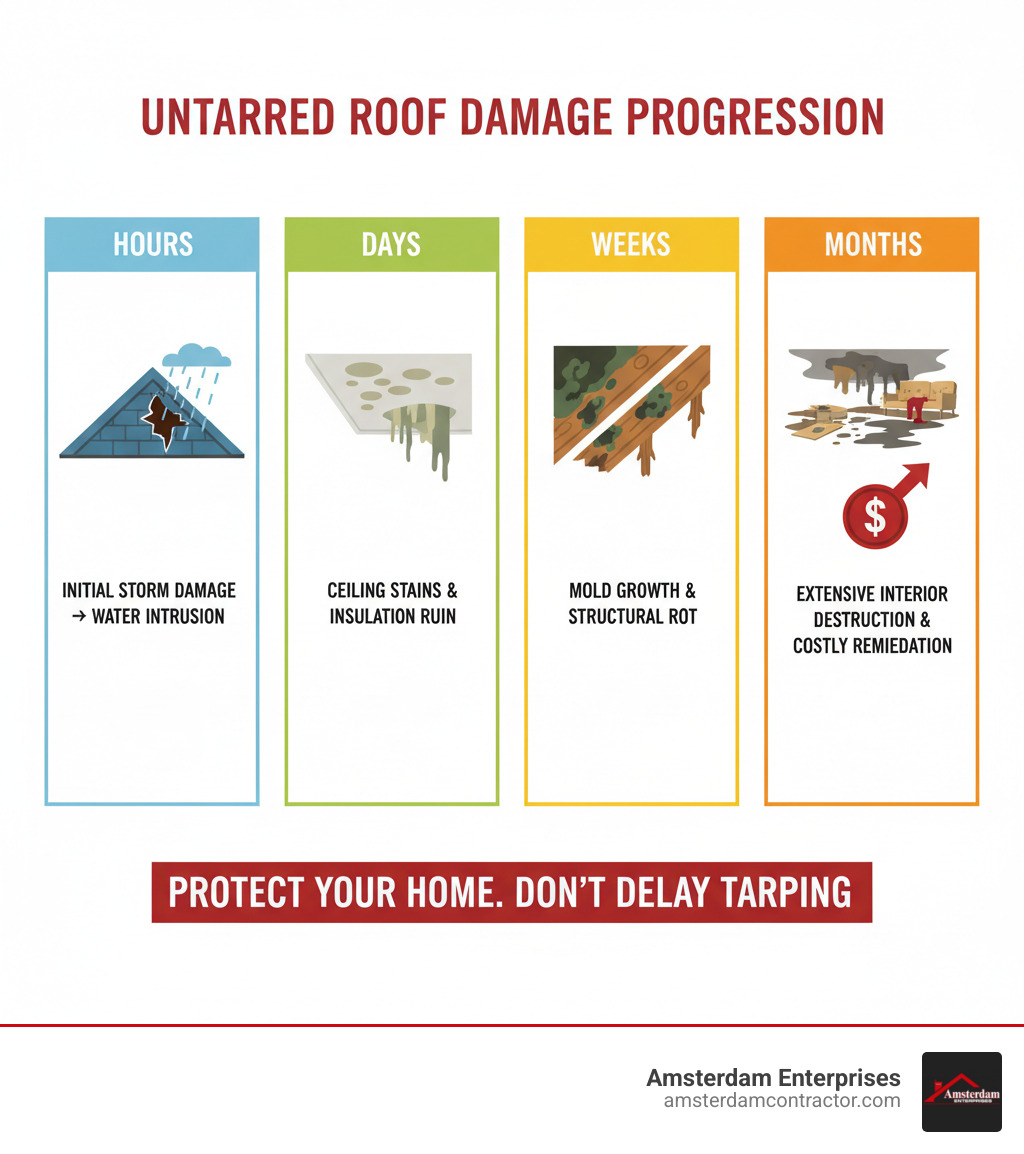
Consequences of Not Tarping
Waiting is costly. Water spreads, and mold growth can start within 24 to 48 hours. Once mold takes hold, you face serious health risks and expensive remediation.
Structural rot develops as moisture saturates the wood decking, rafters, and framing, compromising your home’s integrity.
Wet insulation loses its effectiveness, raising energy bills and requiring replacement. Ceiling and wall damage spreads, causing peeling paint and crumbling drywall. Not to mention, water can ruin personal belongings stored in your attic.
Emergency roof tarping stops this cascade before it starts.
Temporary vs. Long-Term Solutions
Emergency roof tarping is a temporary fix, not a permanent solution. A professional installation typically protects your home for 60 to 90 days, giving you time to work with your insurance company and schedule proper repairs.
The purpose of tarping is damage control. Your homeowners insurance may require you to tarp your roof to prevent further damage. If you don’t, your insurer might deny coverage for additional damage that occurs after the initial event.
Once the tarp is secure, we can assess the full damage and discuss permanent solutions, whether that’s targeted repairs or a complete roof replacement. The tarp buys you time to make the right decision.
The Professional Process for Emergency Roof Tarping
When disaster strikes, a professional emergency roof tarping service follows a systematic approach that prioritizes safety and protection. Here’s what to expect.
Safety First: The Non-Negotiable Precautions
Safety is non-negotiable. Before we start, our crew assesses the situation from the ground for structural issues, downed power lines, and roof stability. We will not work on wet, icy, or dangerously damaged roofs until conditions are safe.
Our team uses professional safety gear, including harnesses, non-slip boots, and eye protection. We use secured ladders with stabilizers and always work in teams. We are trained to spot hidden dangers like electrical hazards and weakened decking, and we never work during active storms. We follow detailed safety protocols, like those in the Tarp & Board Response Team Guidelines.
The Right Materials for Your Emergency Roof Tarping
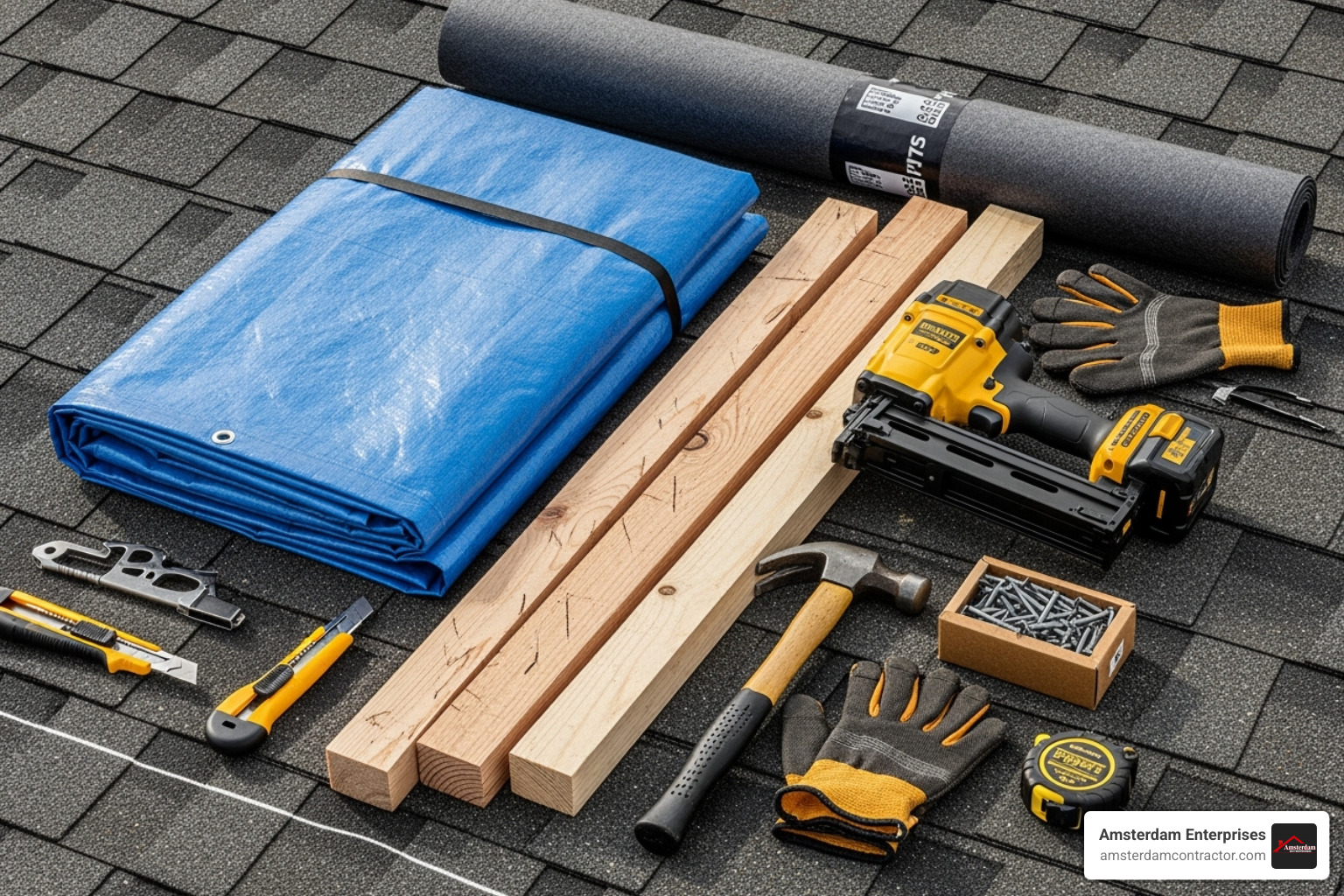
Quality materials are essential. We use heavy-duty polyethylene tarps with ripstop material or, for more extreme conditions, durable vinyl tarps. These offer superior waterproofing and UV resistance.
We choose the right tarp thickness (measured in mils) for your situation, always prioritizing UV protection to prevent degradation. The tarp is secured with 2×4 wood planks to distribute pressure and prevent tearing. We use professional-grade cap nails and roofing screws that won’t pull out in high winds. For sealing around chimneys and vents, we use specialized roofing cement or tape for a watertight seal.
How Professionals Install a Weather-Resistant Tarp
Our installation technique ensures a weather-resistant barrier.
First, we conduct a thorough damage assessment, documenting everything with photos and videos for your insurance claim. We then carefully remove any debris from the damaged area to prevent punctures.
We measure the damaged area and ensure the tarp extends at least three to four feet beyond the damage on all sides. This overlap is essential to prevent wind-driven rain from getting underneath.
We create a strong anchor board by rolling one end of the tarp around a 2×4 and securing it at the roof’s peak. We then stretch the tarp tightly over the damaged section to prevent water from pooling and secure the sides and bottom with more anchor boards.
Sealing around penetrations like chimneys and skylights is critical. We integrate them into the weatherproof barrier using roofing tape or sealant. Finally, we conduct a thorough inspection to ensure the tarp is taut and secure.
This meticulous approach provides reliable protection until you can schedule a permanent repair. Learn about our roof installation process to see how we’ll restore your roof.
DIY vs. Hiring a Professional: A Critical Decision for Your Home’s Safety
When your roof is damaged, the instinct is to act fast. However, DIY emergency roof tarping is risky and can lead to serious injuries or more roof damage.
Risks of DIY Tarping
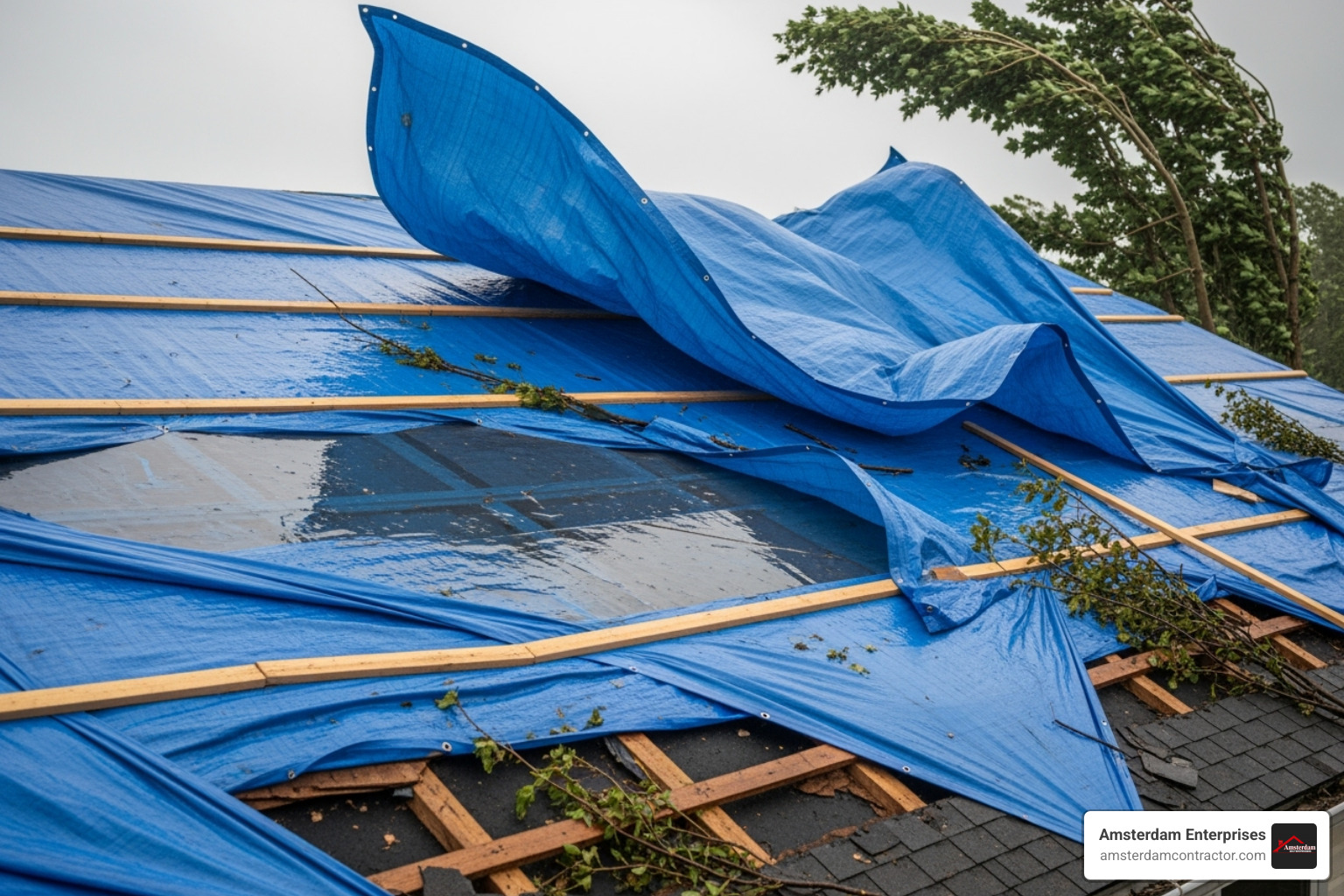
The biggest risk is personal injury. Falls from roofs are a leading cause of injury and death for homeowners attempting repairs. A damaged roof is treacherous—it can be wet, debris-covered, or structurally unsound. Without professional safety gear and training, the risk is immense.
You can also cause more damage to your roof. Improper techniques, like nailing directly into the tarp, create new holes for water to enter. A poorly secured tarp can also fail, becoming a dangerous projectile in high winds and leaving your roof exposed again. Furthermore, your insurance policy might not cover additional damage caused by improper DIY repairs.
Benefits of Professional Service
Calling Amsterdam Enterprises for emergency roof tarping is an investment in safety and peace of mind. Our team provides 24/7 emergency response because disasters don’t keep business hours.
Our licensed and insured professionals know how to install tarps correctly and securely on any roof type, using the right heavy-duty materials and anchor boards for a durable fix. Safety compliance is built into everything we do.
We also provide insurance documentation assistance. We thoroughly photograph the damage and our repairs to create a detailed record that supports your claim. We’ve helped countless homeowners in the Chicago area steer the insurance process. Find a roofing contractor near you in our extensive service area.
Common DIY Tarping Mistakes to Avoid
If you attempt a DIY repair, avoid these common mistakes:
- Using a cheap or undersized tarp: You need a heavy-duty tarp that extends 3-4 feet beyond the damage on all sides.
- Inadequate securing methods: Bricks or sandbags will fail. Use anchored wood planks to create a secure hold.
- Creating additional penetrations: Nailing directly through the tarp creates new leak points.
- Not extending the tarp far enough: A generous overlap is essential to block wind-driven rain.
- Ignoring safety measures: Never go onto a damaged roof without proper safety gear and a helper. If in doubt, call a professional.
Understanding Costs, Insurance, and Tarp Lifespan
Dealing with roof damage is stressful. Let’s break down the costs, insurance coverage, and how long a temporary tarp will last.
Understanding the Cost of Emergency Roof Tarping
Several factors influence the cost of emergency roof tarping: roof size, pitch, accessibility, and the extent of damage. Emergency after-hours service also affects pricing.
Professional emergency roof tarping typically costs between $175 and $700. Emergency rates are higher, around $1.00 to $2.80 per square foot, and a call-out fee of $100 to $200 may apply for after-hours service. While DIY materials might seem cheaper, those savings vanish if the tarp fails or you get injured.
The cost of professional tarping is a smart investment when compared to the potential costs of not tarping:
| Category of Damage | Estimated Repair Cost (without tarping) | Cost of Professional Tarping |
|---|---|---|
| Extensive Water Damage (Ceiling/Walls) | $1,000 – $10,000+ | $175 – $700 |
| Mold Remediation (Moderate to Severe) | $500 – $6,000+ | $175 – $700 |
| Structural Wood Rot (Roof Deck/Rafters) | $2,000 – $15,000+ | $175 – $700 |
| Damaged Insulation | $500 – $2,500+ | $175 – $700 |
| Ruined Personal Property | Varies widely, potentially priceless | $175 – $700 |
Does Homeowners Insurance Cover Tarping?
Yes, your homeowners insurance almost certainly covers emergency roof tarping. Insurers view it as a “reasonable repair” that mitigates further damage and prevents larger claims. Your policy typically covers tarping if the original damage is a covered event.
It is crucial to document everything with photos and videos for your claim. Our team provides the necessary documentation and can work with your adjuster to smooth the process. We help homeowners throughout the Chicago area with insurance claims. Our services in Chicago include this support.
Tarp Lifespan and Signs of Failure
Emergency roof tarping is a temporary fix. A professional installation lasts 60 to 90 days before materials begin to degrade from sun and weather. The tarp buys you time to arrange permanent repairs, but you must monitor it for signs of failure:
- Looseness or flapping: A tarp should be taut, not billowing.
- Water pooling: Standing water indicates a drainage problem.
- Visible tears or holes: Any damage compromises the tarp’s integrity.
- New leaks inside: This is the most obvious sign of failure.
If you see these signs, call us immediately. It’s time for a permanent solution.
Frequently Asked Questions about Emergency Roof Tarping
Homeowners often have the same questions about emergency roof tarping. Here are some straightforward answers.
How long can a tarp stay on my roof?
A professionally installed tarp can last up to 90 days, but it is strictly a temporary measure. You should schedule a permanent Roof Repair as soon as possible. Delaying permanent repairs risks UV degradation, loosening of the tarp, and potential water intrusion, which can lead to rot or mold.
Will tarping my roof cause more damage?
No, professional emergency roof tarping will not cause more damage. We use techniques like anchoring with 2×4 boards to distribute weight and minimize new punctures. In contrast, improper DIY installation often creates more holes and new leak points, defeating the purpose of the tarp.
Is emergency roof tarping worth the cost?
Absolutely. The average cost of professional tarping ($175 – $700) is a small investment compared to the thousands you could spend on repairs for extensive water damage, structural issues, and mold remediation that can occur if the roof is left exposed. A small investment in a professional tarp job can prevent thousands of dollars in interior repairs, protecting your home and providing peace of mind.
Secure Your Home Today with Professional Tarping
If your home’s roof has been damaged, it needs immediate protection. Emergency roof tarping is an urgent, necessary step that stands between your home and potentially catastrophic damage.
Delaying can turn a small leak into a collapsed ceiling. Water damage spreads quickly, mold can grow within 48 hours, and repair bills can skyrocket from hundreds to thousands of dollars.
Professional installation makes all the difference. It’s safer, more effective, and provides peace of mind. We use proper safety protocols, the right materials, correct installation techniques, and provide documentation for your insurance claim.
Emergency roof tarping is a temporary but vital measure, typically lasting 60 to 90 days. It buys you time to schedule permanent repairs, prevents escalating costs, and protects your family. Think of it as critical first aid for your home.
For homeowners throughout the Chicago area—including Arlington Heights, Barrington, Buffalo Grove, Crystal Lake, Des Plaines, Elk Grove Village, Glenview, Hawthorn Woods, Kildeer, Lake Zurich, Long Grove, Mount Prospect, Northbrook, Palatine, Schaumburg, or Wood Dale—Amsterdam Enterprises is ready to respond with rapid, reliable emergency services.
Don’t wait for a small leak to become a disaster. Contact us for emergency roof repair right now, and let us provide your home with the immediate protection it needs.