

Follow us
Roofing Companies Near Me Roof Repair Roofers Near Me Roof Installation Roof Repair Near Me Roofing Contractor Siding Installation Roof Replacement Near Me Roofing Near Me Roofing Contractors Near Me Roof Inspection Siding Contractors Near Me Roof Installation Near Me Siding Companies Near Me Roofing Contractor Near Me Window Replacement Companies Near Me Roofing And Siding Contractors Near Me Masonry Contractor Near Me Yelp Roofing Companies Near Me Roof Repair Roofers Near Me Roof Installation Roof Repair Near Me Roofing Contractor Siding Installation Roof Replacement Near Me Roofing Near Me Roofing Contractors Near Me Roof Inspection Siding Contractors Near Me Roof Installation Near Me Siding Companies Near Me Roofing Contractor Near Me Window Replacement Companies Near Me Roofing And Siding Contractors Near Me Masonry Contractor Near Me Roofing Companies Near Me Roof Repair Roofers Near Me Roof Installation Roof Repair Near Me Roofing Contractor Siding Installation Roof Replacement Near Me Roofing Near Me Roofing Contractors Near Me Roof Inspection Siding Contractors Near Me Roof Installation Near Me Siding Companies Near Me Roofing Contractor Near Me Window Replacement Companies Near Me Roofing And Siding Contractors Near Me Masonry Contractor Near Me Roofing Companies Near Me Roof Repair Roofers Near Me Roof Installation Roof Repair Near Me Roofing Contractor Siding Installation Roof Replacement Near Me Roofing Near Me Roofing Contractors Near Me Roof Inspection Siding Contractors Near Me Roof Installation Near Me Siding Companies Near Me Roofing Contractor Near Me Window Replacement Companies Near Me Roofing And Siding Contractors Near Me Masonry Contractor Near Me Roofing Companies Near Me Roof Repair Roofers Near Me Roof Installation Roof Repair Near Me Roofing Contractor Siding Installation Roof Replacement Near Me Roofing Near Me Roofing Contractors Near Me Roof Inspection Siding Contractors Near Me Roof Installation Near Me Siding Companies Near Me Roofing Contractor Near Me Window Replacement Companies Near Me Roofing And Siding Contractors Near Me Masonry Contractor Near Me Roofing Companies Near Me Roof Repair Roofers Near Me Roof Installation Roof Repair Near Me Roofing Contractor Siding Installation Roof Replacement Near Me Roofing Near Me Roofing Contractors Near Me Roof Inspection Siding Contractors Near Me Roof Installation Near Me Siding Companies Near Me Roofing Contractor Near Me Window Replacement Companies Near Me Roofing And Siding Contractors Near Me Masonry Contractor Near Me Youtube

Chimney Repair in Arlington Heights, Illinois

A damaged chimney does more than look bad from the street. Every time it rains in Arlington Heights, water finds the open joints, the cracked crown, the failed flashing — and follows those gaps straight into your walls, your attic, and your firebox. By the time you see a water stain on the ceiling near the chimney, the water has already been traveling through the masonry for a while. Chimney repair in Arlington Heights is how you stop that before it reaches the interior framing, the roof deck, or the firebox liner. This page covers how to read the signs of chimney damage, what causes leaks during rain, when to schedule repair, and what a professional repair actually covers. Amsterdam Enterprises serves Arlington Heights Monday through Friday — call for a free on-site estimate.

The Signs Your Chimney Needs Repair — or a Full Rebuild

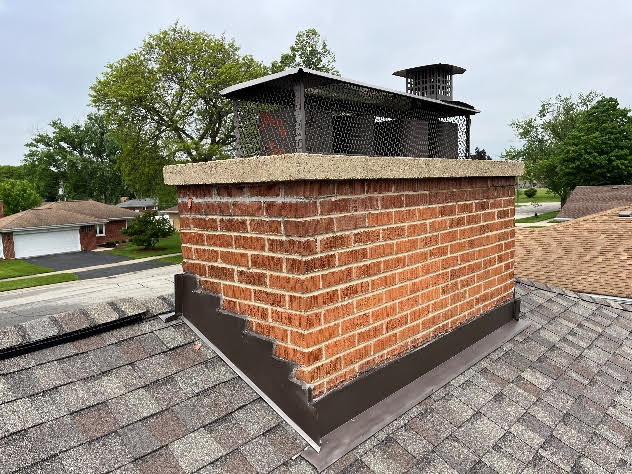
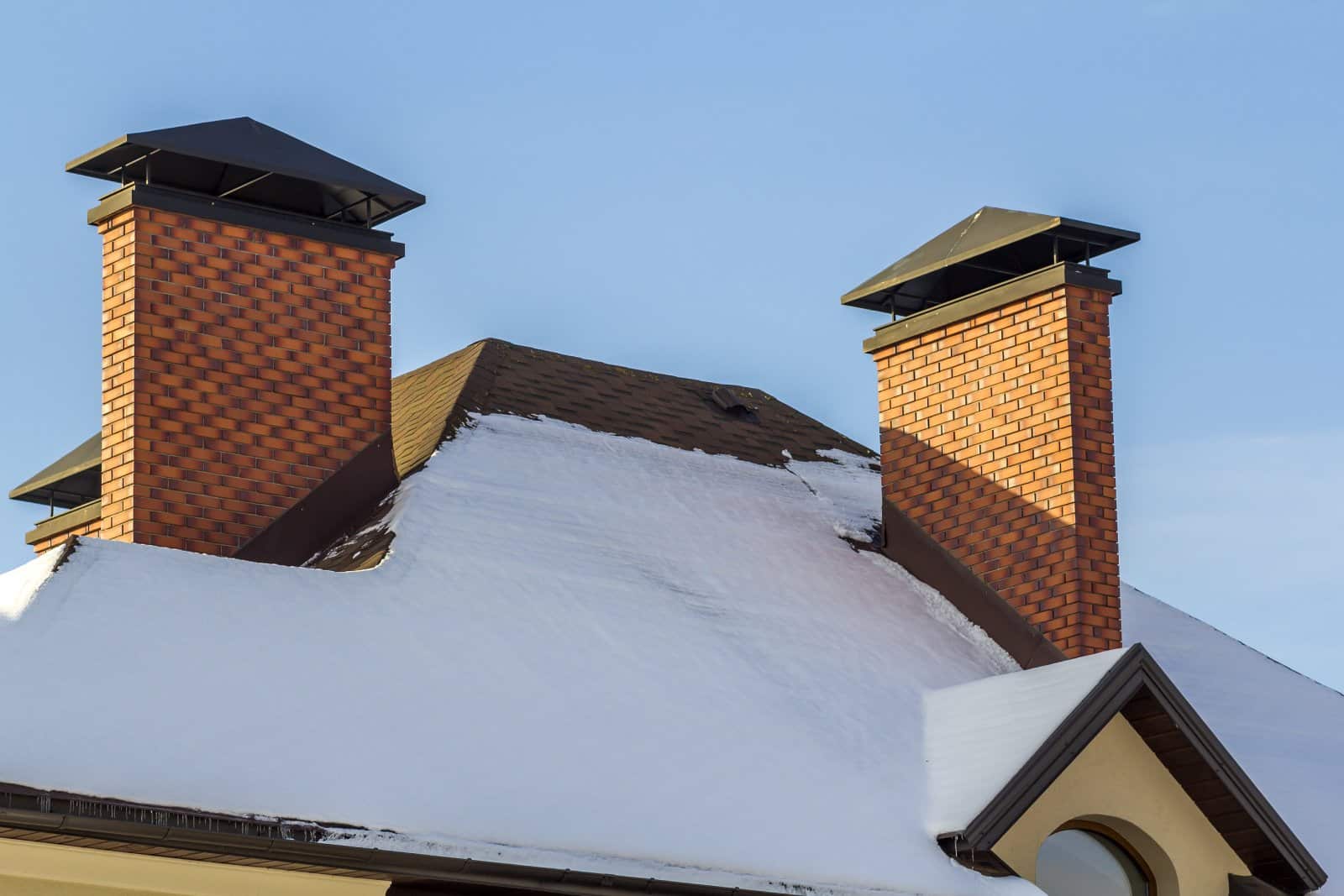
chimney flashing

Not every chimney problem is a rebuild. Not every crack is cosmetic. Reading the damage correctly before you call saves time at the estimate and sets accurate expectations for scope and scheduling.


Signs that repair is the right scope:

  • Hairline cracks in mortar joints — repointing handles this
  • Minor spalling on a few brick faces — isolated brick replacement
  • Damaged or cracked chimney crown — crown repair or replacement
  • Flashing separation at the roofline — reflash or reseal
  • Efflorescence (white salt deposits) on the chimney exterior — signals moisture cycling, not necessarily structural failure
  • Water staining inside the firebox without structural displacement


Signs that a partial or full rebuild is needed:

  • Large sections of missing, crumbled, or washed-out mortar across multiple courses
  • Multiple bricks that are severely spalled, displaced, or missing entirely
  • Chimney that is visibly leaning or out of plumb — structural movement has occurred
  • Collapsed courses at the top of the chimney stack
  • Significant structural damage at the chimney base where it meets the roofline or exterior wall


The middle ground — partial rebuild When the lower courses of a chimney are structurally sound but the upper section has deteriorated beyond repointing, a partial rebuild is the right call. Damaged courses are removed down to sound masonry and rebuilt from there. This is more involved than repair but far less than a full tear-down, and it’s the most common scope on Arlington Heights chimneys that have gone without maintenance for many years.


Interior signals that mean act now Water staining on a ceiling near the chimney, damp smell from the firebox after rain, or visible moisture on the interior firebox walls all mean active water entry. These aren’t inspection items to note for later — they mean water is moving through the chimney structure right now and the damage is accumulating with every rain event.


Arlington Heights chimneys built before 1980 often used softer lime-based mortar mixes that have deteriorated faster under modern freeze-thaw cycles than newer construction. If your home is from that era and the chimney hasn’t been professionally inspected in the past decade, the mortar condition is worth checking regardless of how the exterior looks from the ground.

Why Chimneys Leak in Heavy Rain — and What Actually Fixes It

Chimney leaks during rain are not a normal part of owning an older home. They are a sign of a specific, identifiable problem — and each problem has a defined repair. Applying the wrong fix wastes money and leaves the actual leak source open.

Here are the four most common chimney leak sources and what corrects each one.

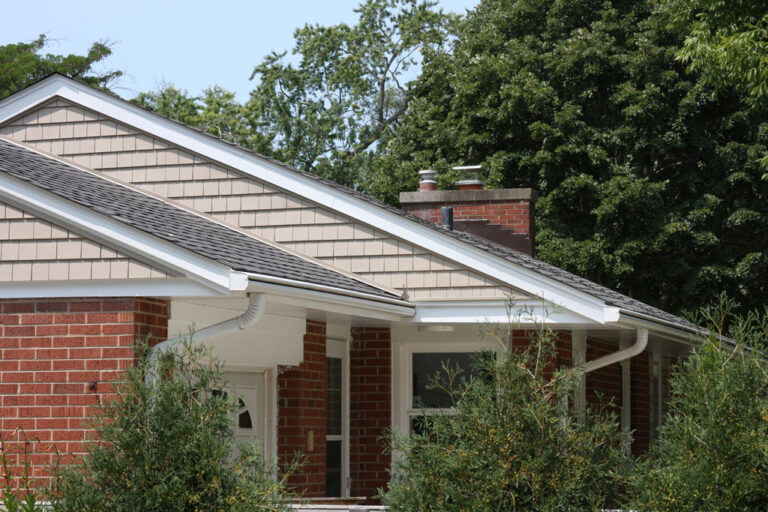
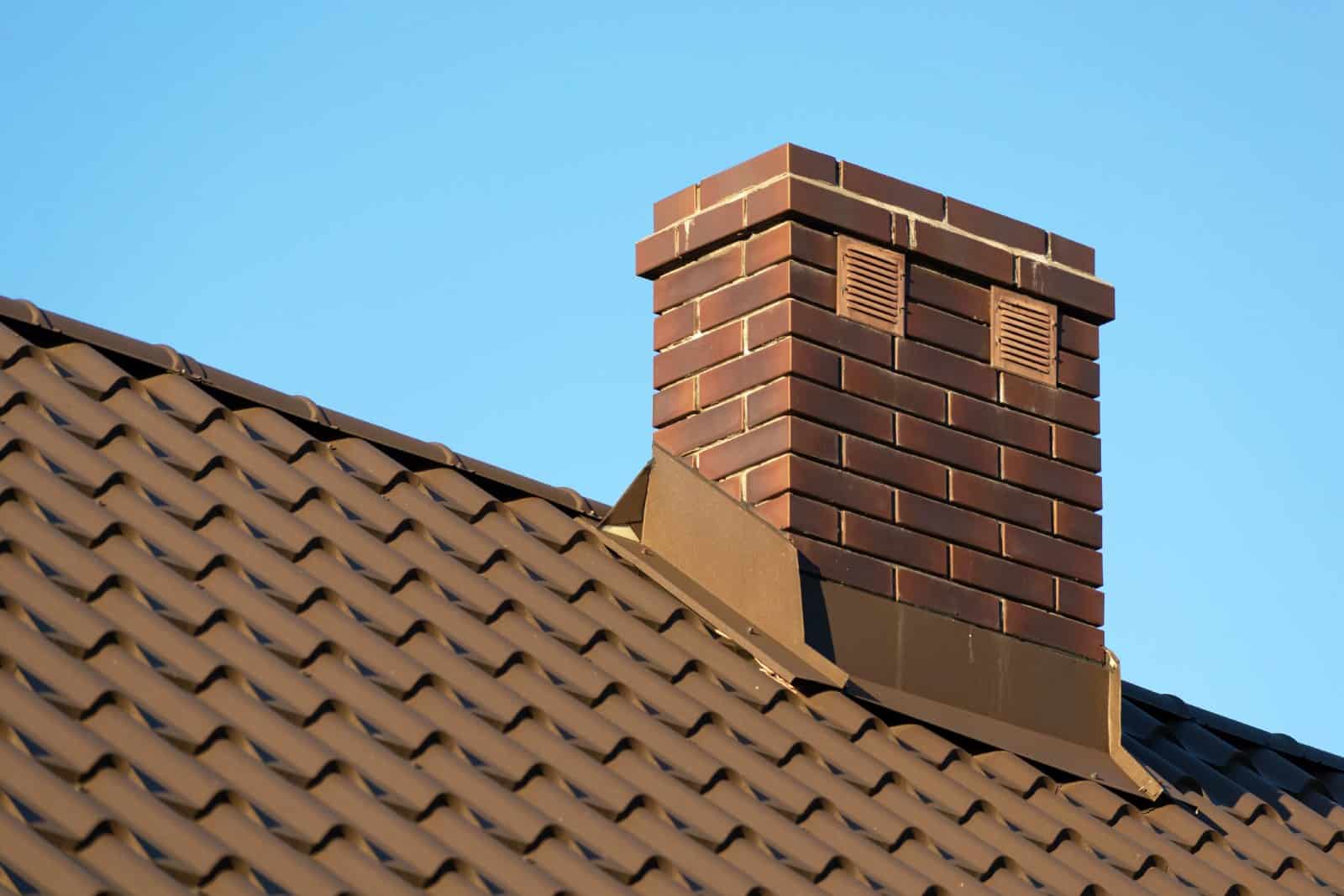
Failed flashing Flashing is the metal that seals the joint where your chimney meets the roof surface. It has two components: step flashing that runs up the sides of the chimney, and counter flashing that’s embedded in the mortar joints and laps over the step flashing. When either component pulls away, rusts through, or loses its seal, water runs directly from the roof surface down into the attic.

Flashing failure is the single most common cause of chimney-related interior water damage. The repair is reflashing — removing the failed material and installing new flashing with proper lap, seal, and mortar embedment. Applying sealant over failing flashing is a temporary measure. It buys a season at best.

Cracked or deteriorated chimney crown The chimney crown is the concrete or mortar cap that covers the top of the chimney structure, surrounding the flue opening. A properly built crown has a slight slope to shed water away from the flue and a drip edge that keeps water from running back onto the brick face. When the crown cracks — which happens from freeze-thaw cycling, improper original construction, or settling — water pools in the crack and enters the masonry directly at the most exposed point of the chimney.

Minor crown cracks can be filled with flexible crown repair material. Crowns that are severely cracked, thin, or improperly constructed need full replacement.

Open or deteriorated mortar joints Chimney masonry is exposed to more weather stress than almost any other part of a home’s exterior — it projects above the roofline with no overhang protection. Mortar joints that have dried out, cracked, or eroded allow water to absorb directly into the chimney body. In heavy rain, that absorption is significant. In winter, that absorbed water freezes and expands the crack further.

The repair is tuckpointing — removing deteriorated mortar and repacking with fresh mortar matched to the existing joint profile and brick type.

Missing or damaged chimney cap A chimney cap sits over the flue opening and keeps rain from falling directly into the flue. Without a cap, every rain event puts water directly into the chimney liner and firebox. Caps also keep birds, squirrels, and debris out of the flue. A missing cap is one of the simplest chimney problems to fix and one of the most damaging to leave unaddressed.

Homes near Lake Arlington in South Arlington Heights experience wind-driven rain from the east more frequently than interior suburban lots. The east-facing flashing on chimneys in this area takes significantly more stress than protected sides. If your chimney faces east toward open water or open ground, flashing on that face warrants closer inspection — it typically fails earlier than south or west-facing flashing on the same chimney.

The Best Time of Year to Schedule Chimney Repair in Arlington Heights

The most common chimney repair mistake Arlington Heights homeowners make is not the wrong repair — it’s waiting too long to schedule the right one. Here’s why timing matters and when the window closes.

Chimney Repair in Arlington Heights, IL | Amsterdam Enterprises

The best repair window: late spring through early fall

Mortar needs moderate temperatures to cure correctly. The chemistry of mortar hydration works best between roughly 40°F and 90°F with no precipitation. Late spring through early fall provides that window consistently in Arlington Heights. Work done in this period cures fully before the first freeze arrives.

Chimney Repair in Arlington Heights, IL | Amsterdam Enterprises

Why fall scheduling is critical

If you notice chimney damage in summer or early fall, don’t defer to next spring. Here’s what happens when you do: water enters the open joints or cracked crown before the freeze. That water freezes in October or November, expands the crack, and creates new fractures. By the time the ground thaws in March, what was a repair job in September has become a larger repair or partial rebuild. Every winter cycle that passes through an unrepaired chimney adds damage.

Chimney repair jobs in Arlington Heights need to be completed and mortar fully cured by mid-October at the latest. That’s the safe window before the first hard freeze typically arrives in northern Illinois.

Chimney Repair in Arlington Heights, IL | Amsterdam Enterprises

Why spring inspection is important

Spring is when the damage from the previous winter becomes visible. Fresh mortar cracks, newly spalled brick faces, and crown surface changes all appear after the freeze-thaw season ends. A spring inspection catches these while they’re still minor — before summer rain events push water through them all season.

Chimney Repair in Arlington Heights, IL | Amsterdam Enterprises

Emergency repairs don't wait for season

Active leaks, displaced brick, structural movement, or a completely failed crown don’t have a best season — they need attention immediately. If your chimney has visible structural displacement or water is actively entering the home, call for an assessment regardless of the calendar.

chimney flashing, Chimney Repair

What Chimney Repair Actually Involves — From Crown to Flashing

Chimney repair is not a single service — it’s a collection of specific repairs applied to whatever components have failed. Here’s what a complete professional chimney repair covers, from the top of the stack to the roofline.

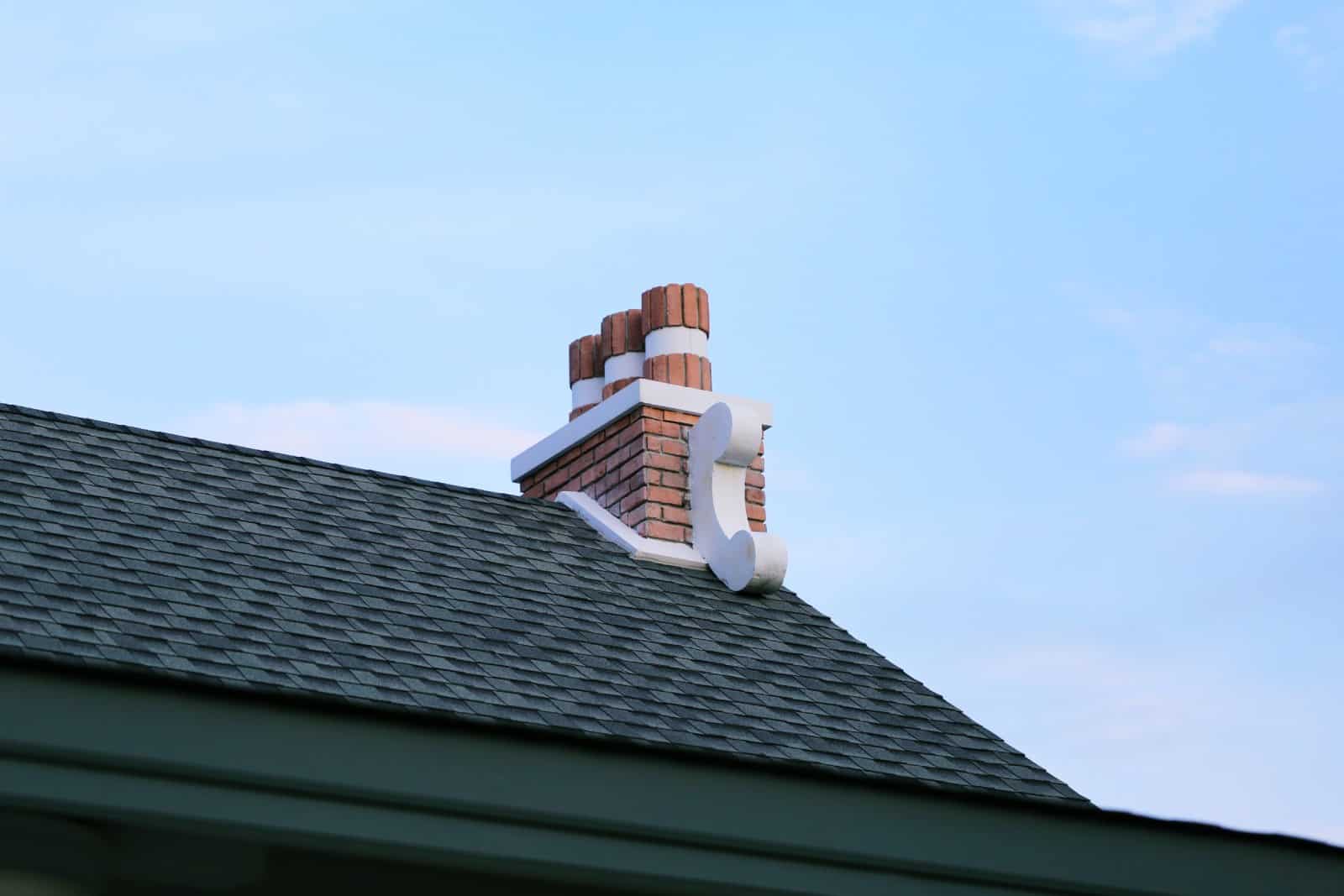
Chimney crown repair or replacement The crown is the first thing a masonry contractor inspects at the top of the chimney. Minor cracks are filled with flexible crown repair compound that bonds to the existing surface and moves with seasonal expansion. Crowns that are severely cracked, crumbling at the edges, or improperly constructed — too thin, no drip edge, flat instead of sloped — are removed and replaced entirely. A correctly built crown sheds water completely away from the flue opening and the brick face below it.

Chimney cap installation or replacement If the cap is missing, damaged, or the wrong size for the flue opening, it’s replaced. Stainless steel caps with mesh sides keep rain, animals, and debris out of the flue while allowing combustion gases to exit. This is one of the most straightforward repairs on the list and one of the highest-impact for preventing ongoing water damage.

Tuckpointing Deteriorated mortar is ground or raked out to a minimum depth of three-quarters of an inch. The joint is cleaned. New mortar is packed in layers and tooled to match the surrounding joint profile. On chimneys, mortar mix selection is especially important — the mortar must be softer than the brick it contacts so that freeze-thaw movement stress goes into the joint, not the brick face. Getting that mix wrong on older Arlington Heights chimneys causes spalling.

Brick replacement Spalled, cracked, or structurally compromised bricks are removed and replaced with matching material. The surrounding joints are repointed as part of the same repair. On chimneys visible from the street or on historic properties, brick matching matters — a mismatched replacement brick on an otherwise uniform chimney face is the mark of a contractor who didn’t take that step seriously.

Flashing repair or replacement Step flashing and counter flashing are inspected at the roofline junction. Flashing that has pulled away, rusted, or lost its mortar embedment is removed and replaced. The new flashing is lapped correctly, sealed at all edges, and embedded in freshly repointed mortar joints. This repair is done in coordination with any roofing work happening at the same time — a roofing contractor who also handles masonry handles both components without handoffs.

Waterproofing After all structural repairs are complete and mortar has cured, a penetrating waterproof sealant is applied to the chimney exterior. This is not a substitute for structural repair — it’s a final step that reduces water absorption into the repaired masonry. The right sealant is vapor-permeable, meaning it lets moisture vapor escape from the chimney interior while blocking liquid water entry from the exterior.

Older commercial buildings near Downtown Arlington Heights with decorative chimney stacks often have brick varieties and mortar profiles that are no longer standard. Repair work on these structures involves salvage brick sourcing and mortar color and composition matching to keep the chimney consistent with the rest of the facade. A contractor who skips that step leaves a repair that’s structurally sound but visually obvious — not acceptable on a historic or architecturally significant building.

How Long a Chimney Should Last — and What Shortens That Timeline

A well-built chimney on a residential home lasts 50 to 100 years. That’s the structure — the brick courses, the firebox, the base. The components that sit on top of and around that structure have shorter individual timelines, and those are the pieces that need attention through the chimney’s life.

Component lifespans under normal conditions:

  • Brick structure: 50–100 years with proper maintenance
  • Mortar joints: 20–30 years before repointing is needed in Illinois climate
  • Chimney crown: 50+ years if properly constructed with adequate thickness and a drip edge; thin or flat crowns fail much sooner
  • Flashing: 30 years for copper or stainless steel; 15–20 years for standard galvanized; less if improperly installed
  • Chimney cap: 20+ years for quality stainless; replace immediately if damaged or missing

What shortens those timelines significantly:

Skipped maintenance and inspections Small cracks in mortar joints don’t stay small. Each Illinois winter pushes a little more water through, freezes it, and opens the crack wider. A crack that’s a minor repointing job at year five is a partial rebuild candidate by year fifteen if it goes unaddressed.

Wrong mortar in prior repairs This is one of the most common sources of accelerated chimney deterioration in Arlington Heights. A previous contractor used standard Portland cement mortar — hard, rigid, strong — on a chimney with older, softer brick. The mortar doesn’t move with seasonal temperature changes. The brick does. That stress goes into the brick face and causes spalling. Correct mortar selection for the specific brick hardness is a technical requirement, not a preference.

No chimney cap An uncapped flue is an open hole in the top of your home. Rain falls directly into the liner. Animals nest in the flue. Debris accumulates at the damper. All of it accelerates deterioration of the liner, the firebox, and the mortar joints inside the flue. A cap costs almost nothing compared to the liner repair it prevents.

Poor original construction Thin crowns without drip edges, flashing that was surface-applied instead of embedded in mortar joints, insufficient chimney height above the roofline — these original construction deficiencies accelerate failure regardless of maintenance. If your chimney has had recurring problems despite previous repairs, original construction quality may be the underlying cause.

Arlington Heights averages 40 to 60 freeze-thaw events per year. Each event applies stress to any open or compromised joint. A chimney with deteriorating mortar in this climate fails significantly ahead of its structural potential. Regular maintenance keeps the mortar ahead of the freeze cycle — skipping it lets the freeze cycle win.

How to Keep Your Chimney in Good Shape Between Professional Services

Chimney Repair in Arlington Heights, IL | Amsterdam Enterprises

A professional repair done correctly is built to last. What you do in the years between protects that investment, extends the mortar lifespan, and catches new damage before it becomes another repair call.


Spring — inspect after freeze-thaw season Walk around your home in March or April and look up at the chimney. You’re looking for fresh mortar cracks that weren’t there last fall, newly spalled brick faces, any change in the crown surface, and efflorescence — white salt deposits on the brick face that signal moisture is moving through the masonry. Catching these in spring means a minor repair before summer rain events push water through them all season.


Fall — check before the freeze window closes Before mid-October, confirm the chimney cap is in place and undamaged. Look at the flashing from the ground — any visible separation or lifting at the roofline junction. Check for any obvious new joint gaps on the south and west faces of the chimney. If anything looks different from last year, schedule an inspection before the freeze window closes. What looks minor in September becomes harder to address correctly after the first freeze.


After storms — check for hail and wind damage Hail damages chimney caps and can fracture soft brick faces. High wind events can displace caps entirely or loosen flashing at the edges. After any significant storm, take a look from the ground and from inside — check the firebox for any debris that suggests the cap was displaced or the flue was opened to the weather.


Keep the cap in place If the cap is missing for any reason — wind damage, animal interference, prior repair that didn’t include cap replacement — replace it immediately. Every rain event without a cap puts water directly into the flue. Every cold night without a cap is an invitation for animals to nest in the liner.


Don’t ignore interior signals A water stain on the ceiling near the chimney, a damp smell from the firebox after rain, or visible moisture on the firebox back wall — these are not watch-and-wait situations. They mean active water entry. The longer active water entry continues, the larger the repair scope grows.


Schedule professional inspection every 3–5 years Flashing condition, crown surface integrity, and upper mortar joint condition aren’t always visible from the ground. A contractor who gets on the roof and looks at the chimney top catches things a ground-level visual misses entirely. Every 3–5 years is the right interval for a professional chimney inspection even when nothing looks wrong from below.


Homes in the northwest neighborhoods of Arlington Heights near heavier tree canopy accumulate moss, lichen, and debris on chimney tops faster than open-lot properties. Organic growth holds moisture directly against the crown and upper brick courses and accelerates deterioration. An annual check of the cap and crown — and clearing any moss or debris buildup — is a five-minute task that protects years of masonry life.

Frequently Asked Questions (FAQs)

How do I know if my chimney needs repair or a full rebuild?

Hairline mortar cracks, minor spalling on isolated bricks, a damaged crown, and flashing failure are all repair scope. Displaced or missing brick across multiple courses, a chimney that’s visibly leaning, collapsed top courses, or significant structural damage at the base signal partial or full rebuild. The line between the two isn’t always clear from the ground — a professional inspection confirms which scope applies to your chimney.

No. Chimney leaks during rain always indicate a specific problem: failed flashing at the roofline, a cracked or deteriorated crown, open mortar joints absorbing water, or a missing chimney cap. None of these are normal aging that you accept and live with. Each has a defined repair that stops the leak at its source. Surface sealant applied without addressing the structural cause doesn’t fix a chimney leak — it temporarily masks it.

Late spring through early fall is the optimal window — mortar cures correctly in moderate temperatures and the work is protected from freeze before it sets. Fall scheduling is especially important: repairs completed by mid-October allow full mortar cure before northern Illinois’ first hard freeze arrives in October or November. Waiting through winter turns a repair-scope job into a larger one by spring.

The brick structure of a well-maintained chimney lasts 50 to 100 years. The components need individual attention on different timelines: mortar joints every 20–30 years, flashing every 15–30 years depending on material, the crown 50+ years if properly built. Regular inspection keeps all components on track. The chimneys that fail early in Arlington Heights are almost always ones that went without maintenance through multiple freeze-thaw seasons.

Freeze-thaw cycling is the primary driver — Arlington Heights averages 40 to 60 freeze events per year, each one stressing any open or compromised joint. Wrong mortar used in prior repairs accelerates spalling. No chimney cap puts rain directly into the flue. Skipped inspections let small cracks grow through multiple winters before anyone addresses them. All four of these factors compound each other.

Surface waterproof sealant is a final step after structural repairs are complete — not a fix for an active leak. Applied over a cracked crown, failing flashing, or open mortar joints, sealant traps moisture inside the masonry rather than letting it escape. In winter, that trapped moisture freezes and causes more damage than the original leak. Identify and repair the structural source of the leak first. Sealant follows. It does not replace the repair.

Ready to Fix Your Chimney Before the Next Illinois Winter?

📞 Phone: (847) 439-1814
📱 Text: (847) 429-8885
🌐 Website: amsterdamcontractor.com

Get in Touch Today

Amsterdam Enterprises has repaired and restored chimneys on Arlington Heights homes and commercial buildings since 1982. We’re a licensed, insured masonry and exterior contractor serving the area Monday through Friday.

Or Send Us a Message